
Mastering Vegan Cheese – Tips for Tasty Dairy-Free Cheese
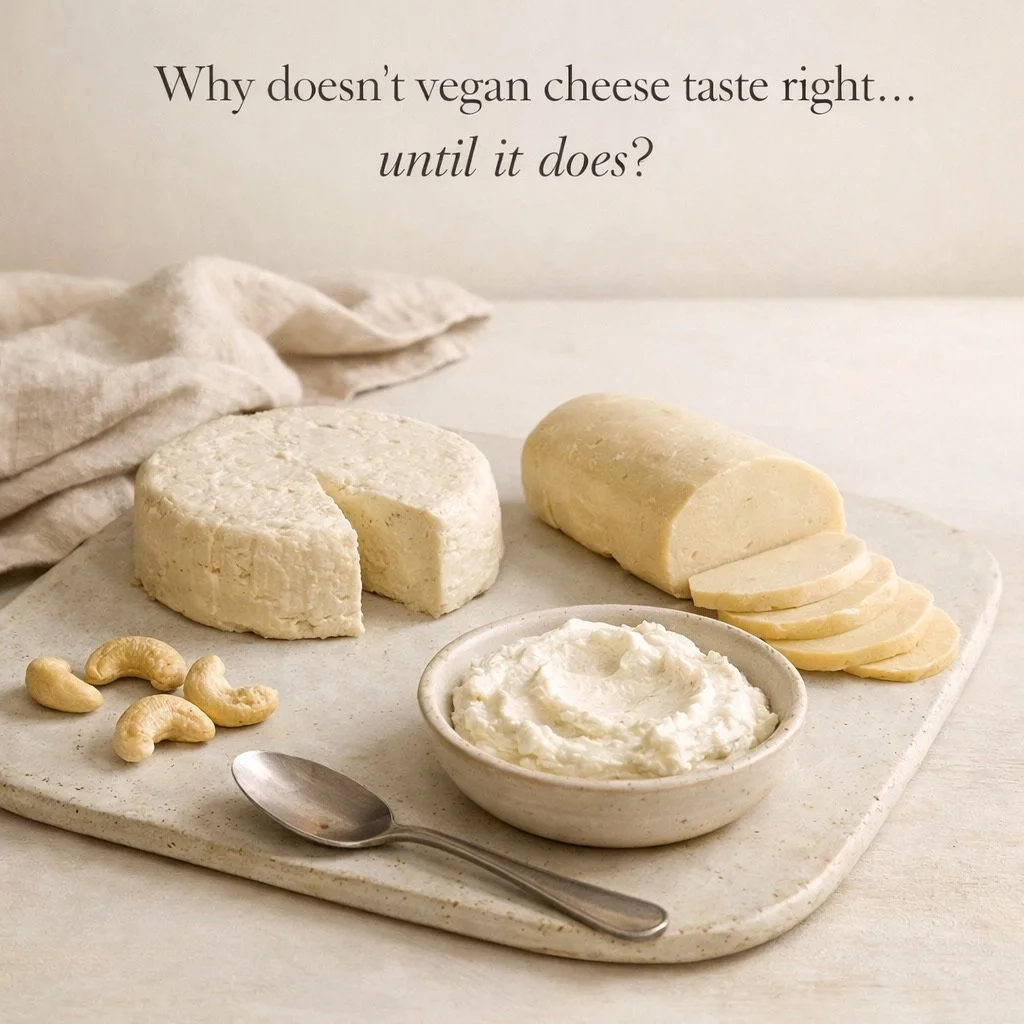
Vegan cheese doesn’t disappoint because it’s plant-based.
It disappoints when it’s asked to behave like dairy.
Milk cheese is built on casein — a unique protein network that can trap fat, hold structure, and melt in ways plants simply can’t replicate. Vegan cheese plays a different game entirely. It’s not a copy. It’s a separate food system, governed by different rules.
Once you stop chasing dairy logic and start cooking within plant logic, vegan cheese stops feeling like a compromise — and starts feeling intentional.
Vegan Cheese Is an Engineered Food — That’s Not a Bad Thing
Dairy cheese forms naturally through fermentation and coagulation. Vegan cheese must be designed.
Most successful vegan cheeses rely on:
plant fats for the body and melt
starches or hydrocolloids for structure
acids and fermentation for flavour
This isn’t artificial — it’s culinary engineering. The mistake isn’t using these tools. The mistake is using them without understanding what they do.
Choose Your Base for Structure, Not Trend
Every vegan cheese begins with a base. That base determines texture long before flavour comes into play.
Common Bases and What They Do
Cashews – high natural fat, ideal for creamy and spreadable styles
Soy – higher protein, better for firm or sliceable cheeses
Oats – naturally viscous, useful for grateable or melt-style cheeses
Seeds (sunflower, pumpkin) – economical, but require careful balancing
Coconut – fat-forward, best used as a supporting ingredient
There is no “best” base — only the right base for the job.
Fat Is the Backbone of Vegan Cheese
In dairy cheese, fat isn’t just richness — it’s structure.
The same is true for vegan cheese.
Without enough fat:
texture turns rubbery or chalky
flavour feels thin
melting becomes impossible
Functional Plant Fats
Refined coconut oil – clean flavour, sharp melt point
Cocoa butter – firmer structure for sliceable cheeses
Nut fats – creaminess and body
Olive oil – best for fresh or spreadable styles
Low-fat vegan cheese almost always fails — not because it’s unhealthy, but because it’s structurally incomplete.
Acid Creates “Cheesiness”
Salt alone won’t make vegan cheese taste like cheese.
Acid is what gives it life.
Controlled acidity:
cuts through fat
mimics cultured tang
unlocks savoury depth
Better Acid Choices
Lactic acid – soft, rounded, dairy-adjacent tang
Apple cider vinegar – gentle and balanced
Lemon juice – bright, but easy to overdo
White miso – acidity plus umami
Add acid slowly. Vegan cheese crosses the line from flat to harsh very quickly.
Fermentation: Powerful, but Not Mandatory
Fermentation can elevate vegan cheese — but it isn’t required, and it isn’t always safe.
Short, controlled fermentation adds:
depth
savouriness
subtle aged character
Safer Fermentation Tools
white or chickpea miso
lactic acid
food-grade probiotic cultures
Wild ferments like rejuvelac are unpredictable and carry food safety risks for home cooks. They’re best avoided unless you’re experienced and working under controlled conditions.
Good vegan cheese comes from control, not chance.
Melting Is Chemistry, Not Luck
Vegan cheese doesn’t melt by accident. It melts because the right gel network forms under heat.
Ingredients That Enable Melt
Tapioca starch – elasticity and stretch
Potato starch – smoothness
Carrageenan – creamy, heat-reversible melt
Agar agar – firm set, minimal melt
Blending starches often works better than relying on one.
Stretchy cheese, sliceable cheese, and sauce cheese are three different formulas, not variations of the same one.
Salt Is Structural
Salt doesn’t just season vegan cheese — it stabilises it.
It:
sharpens flavour
balances bitterness
reinforces structure
mimics aged depth
Vegan cheese should taste slightly saltier than ideal before chilling. Cold dulls flavour, and under-salting is one of the most common beginner mistakes.
Temperature Unlocks Flavour
Straight-from-the-fridge vegan cheese is rarely at its best.
Cold:
firms plant fats
mutes aroma
flattens flavour
Letting cheese sit at room temperature for 10–15 minutes:
softens texture
releases volatile compounds
improves mouthfeel
This matters even more for vegan cheese than dairy.
A Quiet Note on Nutrition
Vegan cheese is a flavour food, not a protein staple.
Compared to dairy, most plant-based cheeses contain:
less protein
less calcium
more reliance on fats and salt for structure
This doesn’t make them bad — it just means they belong alongside foods like tofu, legumes, and vegetables, not as nutritional replacements for them.
Balance matters more than imitation.
Design for Purpose, Not Perfection
The best vegan cheese isn’t universal — it’s intentional.
Ask first:
Is this meant to melt?
Slice?
Spread?
Crumble?
Then design for that outcome.
A great cheese sauce won’t slice.
A perfect slicing cheese won’t melt into pasta.
That’s not failure — that’s clarity.
The Bigger Picture
Mastering vegan cheese isn’t about chasing dairy.
It’s about learning a new culinary language.
When you stop asking plants to behave like milk and start letting them behave like themselves, vegan cheese becomes thoughtful, savoury, and deeply satisfying.
Not a substitute.
A craft.
🌱 One thoughtful shift in how we cook can change how we eat — and how we care for the world around us.
