
Coconut Curry with Fried Tofu and Kaffir Lime
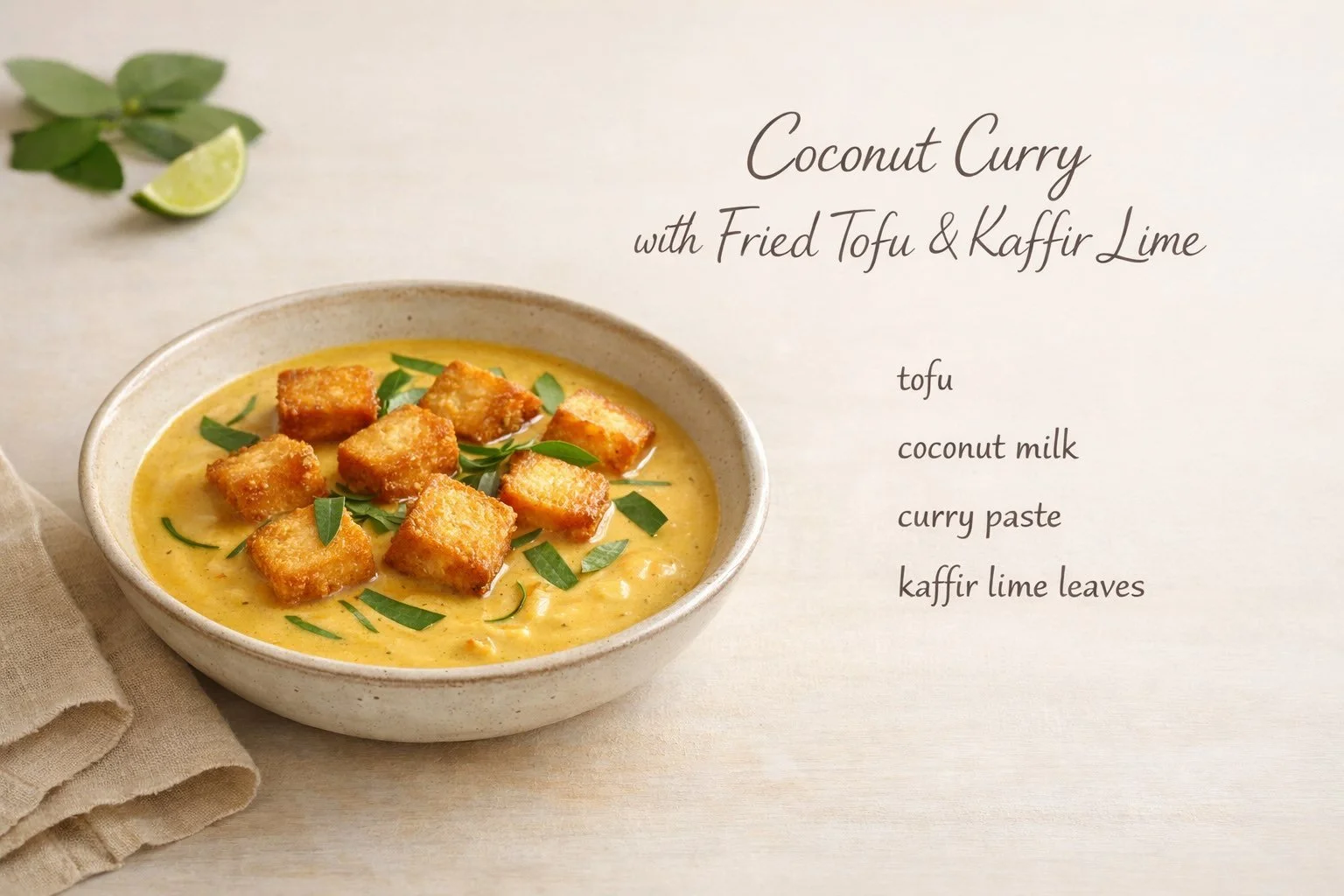
Creaminess with Clarity, Fragrance with Restraint
How to Use This Dish
This is a dish framework, not a fixed recipe.
Instead of measurements, it focuses on fat logic, sequence, and aroma control — so you can adapt to your curry paste, your coconut milk, and your tofu with confidence.
Coconut curry succeeds when restraint leads.
1. Dish Identity
Coconut curry with fried tofu and kaffir lime is a modern, home-style curry built on contrast. Creamy broth meets crisp tofu; richness is lifted by citrus fragrance rather than heat alone.
This is not a long-simmered stew or a fiery challenge dish. It should feel comforting but alert, aromatic but clean — a curry you finish without fatigue.
Here, tofu is structural, not incidental.
2. Cultural & Culinary Roots
Across Southeast Asia, coconut curries developed as a way to balance fat, spice, and climate. Coconut milk provided richness and calories; aromatic leaves and herbs kept dishes light and digestible.
Kaffir lime leaves are used not for acidity, but for fragrance — a sharp, green aroma that cuts through coconut fat without adding sourness. Tofu enters this tradition naturally as a neutral protein that absorbs flavour while offering textural contrast when fried.
This dish respects that logic without claiming a single regional lineage.
3. The Ingredient Logic
Primary Structure — Firm Tofu (Fried Separately)
Firm tofu holds its shape under frying and resists collapsing in curry. Frying creates a protective exterior so the tofu can sit in the sauce without dissolving.
Fat & Body — Coconut Milk
Coconut milk provides richness and mouthfeel. It should coat gently, not smother. Separation and recombination are part of the process, not a flaw.
Aromatic Spine — Curry Paste
Curry paste supplies heat, spice, and savoury depth. It must be cooked in fat to release aroma before liquids are added.
Signature Lift — Kaffir Lime Leaves
Kaffir lime leaves add brightness through aroma alone. They belong late, where heat releases oils without dulling them.
4. Structural Goal (What Success Looks Like)
This section matters most.
Curry: creamy but fluid, lightly coating rather than pooling
Tofu: crisp-edged, intact, resisting sogginess
Aroma: forward and citrusy, not muted
Overall: rich yet refreshing, warming without heaviness
If the curry feels oily, the paste wasn’t cooked properly.
If the tofu goes soft, it entered too early.
5. Cooking Logic (Sequence Over Steps)
Tofu is fried first and set aside.
This protects its texture.
Curry paste is cooked in fat next.
Aromatics need oil and heat to bloom.
Coconut milk is added gradually.
Heat is moderated to prevent greasiness.
Kaffir lime enters near the end.
Fragrance is preserved, not cooked away.
This order exists because texture and aroma are time-sensitive.
6. Flavour Architecture
Dominant: creamy coconut richness
Supporting: savoury spice from curry paste
Accent: bright, green citrus aroma from kaffir lime
Restrained: sweetness, excess chilli, thickness
Sweetness may appear naturally from coconut; added sugar is minimal or absent.
7. Adaptation Window
You can adapt:
curry paste type (red, green, yellow)
coconut milk richness
tofu cut size
You should not:
fry tofu in advance and soak it
boil the curry aggressively
overload with vegetables that release water
Once water dominates, the curry loses clarity.
8. Common Failures & Signals
Greasy surface: the paste was not cooked long enough
Flat aroma: kaffir lime added too early
Soggy tofu: tofu simmered instead of finished in sauce
Broken curry: heat too high after adding coconut milk
Each issue points to sequencing, not ingredients.
9. When & How to Serve
Coconut curry with fried tofu is best served:
hot but gently simmered
freshly finished
with plain rice or simple noodles
It works as:
a comforting dinner
a shared centre dish
a plant-based main that satisfies without excess
This is curry for balance, not bravado.
10. Closing Reflection
Good coconut curry doesn’t overwhelm.
It carries.
When tofu is fried with intention and curry is built in layers, richness becomes calm, and fragrance leads the way.
That’s when comfort turns into clarity — and the bowl empties quietly. 🌱
