
Crispy Tofu Karaage with Yuzu Mayo
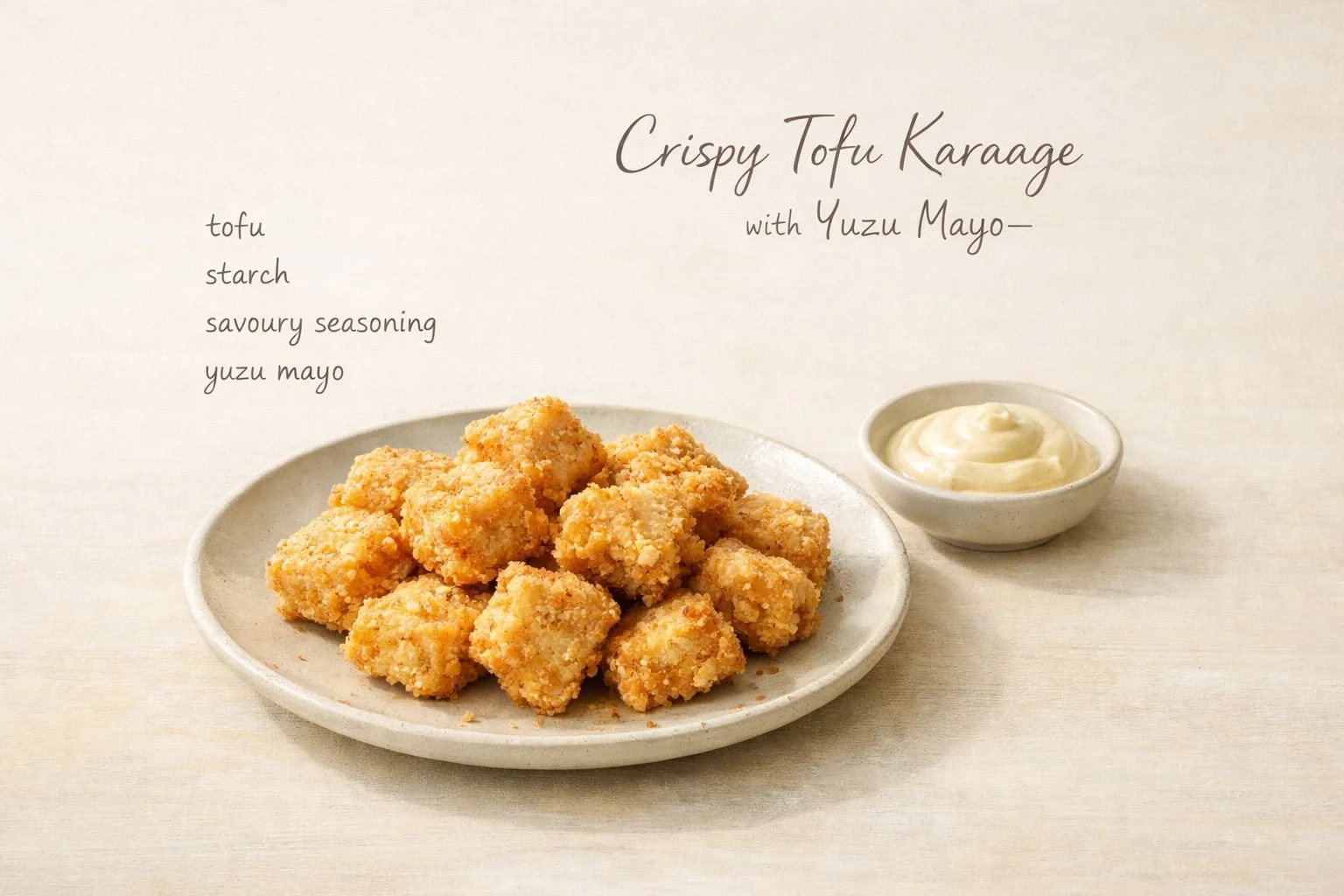
A Japanese-inspired fry built on lightness, not heaviness
How to Use This Dish
This is a dish concept, not a fixed recipe.
Instead of exact measurements, the focus is on structure, sequence, and balance — so you can adapt confidently to your tofu, your kitchen, and your taste.
At Tofu World, this is how we cook: understanding first, execution second.
1. Dish Identity
Tofu karaage is a quiet reinterpretation of a Japanese classic. Where chicken karaage is prized for its crisp shell and juicy centre, tofu karaage explores the same contrast — but through moisture control, coating logic, and restraint rather than fat or force.
This dish is not about making tofu imitate meat.
It’s about letting tofu express lightness with structure.
2. Cultural & Culinary Roots
Karaage refers less to a single ingredient and more to a technique: small pieces, lightly seasoned, thinly coated, and cooked quickly for contrast.
In Japanese home cooking, karaage values:
clean flavours
crisp texture without greasiness
balance over intensity
Applying this logic to tofu works precisely because tofu is already hydrated and delicate. It rewards gentler handling and thoughtful sequencing.
3. The Ingredient Logic
Primary Structure — Firm Tofu
Firm tofu provides enough integrity to hold a crust while remaining softly set inside. The goal is resistance without toughness.
Seasoning Backbone — Savoury, Not Loud
Soy-based seasoning delivers salt and umami without overwhelming tofu’s natural calm. This is surface seasoning, not deep marination.
The Coating — Dry, Fine, Minimal
A light starch coating creates the crisp shell. Thickness dulls texture; restraint sharpens it.
The Sauce — Yuzu Mayo as Contrast
Yuzu mayo is not a blanket. It exists to:
soften richness
add citrus lift
reset the palate
The tofu should still taste like tofu.
4. Structural Goal (What Success Looks Like)
This is the most important checkpoint.
Exterior: crisp, dry, lightly craggy — never thick or bready
Interior: moist, clean, softly set
Overall: light enough to eat several pieces without fatigue
If the tofu feels heavy or oily, the balance is off.
5. Cooking Logic (Sequence Over Steps)
Moisture is managed first.
Surface water is the enemy of crispness — drying matters more than seasoning.
Seasoning comes before coating, but lightly.
The tofu should be flavoured, not soaked.
Coating happens just before cooking.
Starch performs best when dry and fresh.
Heat is decisive, not prolonged.
The crust forms quickly, sealing moisture inside.
Sauce stays separate.
Crispness and creaminess meet only at the bite.
6. Flavour Architecture
Dominant: savoury, clean, lightly aromatic
Supporting: gentle citrus acidity from yuzu
Restrained: oil, sweetness, heaviness
This dish succeeds when it tastes bright and composed — not indulgent.
7. Adaptation Window
You can adapt:
tofu brand or firmness
starch type
citrus element (yuzu, lemon, sudachi)
You should not:
skip drying the tofu
overcoat with starch
drown the tofu in the sauce
Once the crust thickens or the sauce dominates, the dish loses its karaage identity.
8. Common Failures & What They Mean
Soggy crust: excess surface moisture or overcrowding
Thick, gummy coating: too much starch or delayed cooking
Bland interior: seasoning added too late or only to the coating
Greasy finish: heat too low or cooking too long
Each signal points to sequence — not skill.
9. When & How to Serve
Best served:
hot or just warm
freshly cooked
with sauce on the side
Works beautifully as:
a shared plate
a bento component
a light centrepiece with rice and greens
10. Closing Reflection
Tofu karaage isn’t about excess crunch or bold flavour.
It’s about control.
When moisture, coating, and heat are in balance, tofu becomes quietly compelling — crisp on the outside, calm within.
That’s not imitation.
That’s understanding.
And that understanding is what makes tofu feel at home in any kitchen. 🌱
