
Crispy Tofu Buddha Bowl with Tahini–Lime Dressing
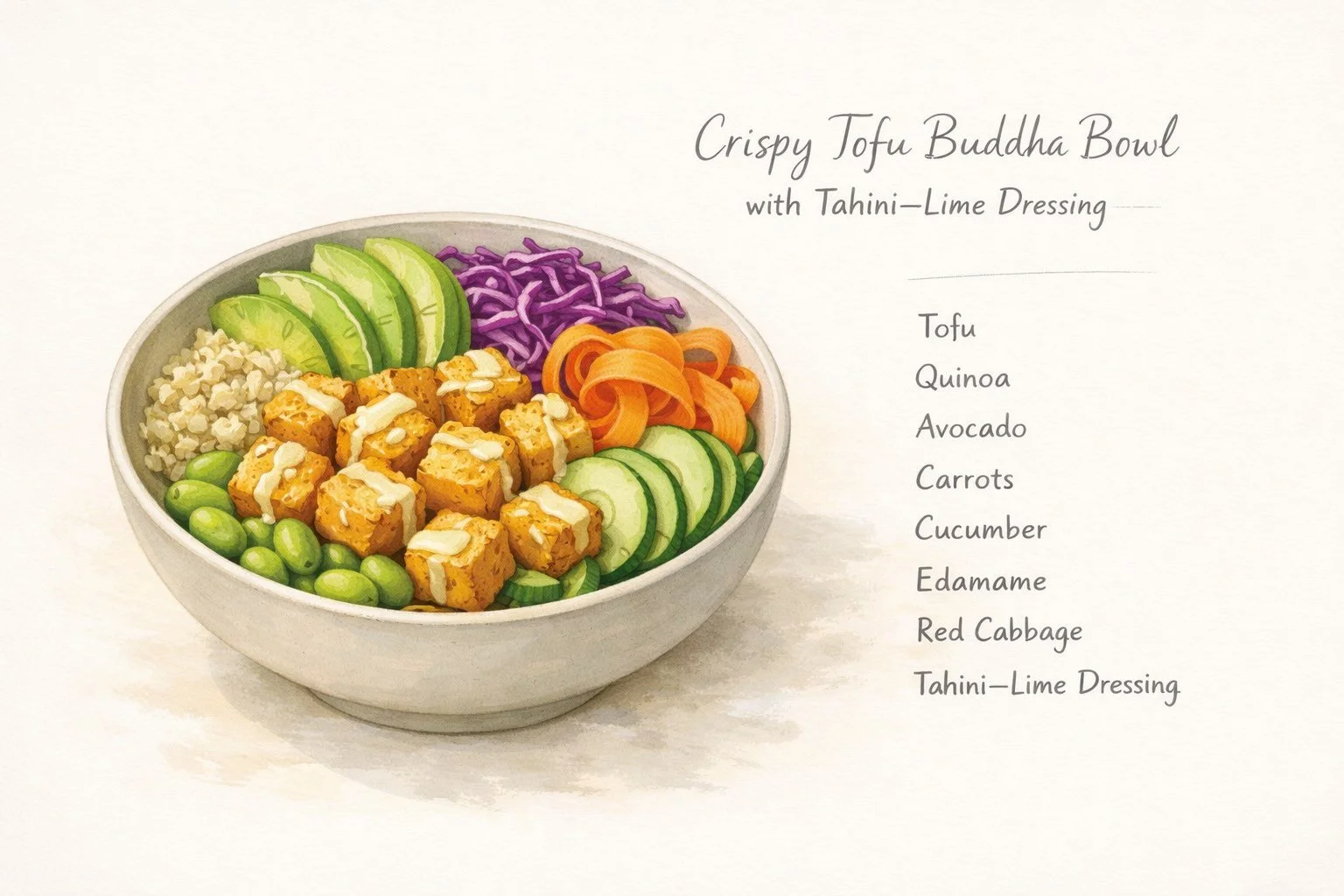
A Balanced Bowl Built on Contrast, Calm, and Intention
How to Use This Dish
This is a bowl concept, not a fixed recipe.
Instead of exact quantities, the focus is on structure, contrast, and assembly logic — so you can adapt confidently to your vegetables, your grains, and your tofu.
At Tofu World, bowls aren’t built by chance.
They’re built with understanding.
1. Dish Identity
This Buddha bowl is about composure.
Where many bowls chase abundance — more toppings, more sauces, more colour — this one prioritises clarity. Each component has a role. Nothing competes.
Crispy tofu anchors the bowl.
Fresh vegetables keep it light.
Tahini–lime dressing binds without smothering.
This is not a “clean-out-the-fridge” bowl.
It’s a balanced plate, reimagined in a bowl.
2. Culinary Roots & Modern Context
The idea of a composed bowl is older than the term “Buddha bowl” itself.
Historically, Buddhist monks carried a single bowl (pātra) used to receive varied vegetarian offerings during daily alms. These meals weren’t designed for abundance or indulgence, but for balance, nourishment, and restraint — a quiet harmony of grains, vegetables, and plant proteins gathered into one vessel.
In its modern form, the Buddha bowl emerged as a way to express that same philosophy through contemporary, plant-forward cooking: whole grains, fresh vegetables, and simple proteins arranged with intention rather than excess.
The problem arises when bowls drift away from this lineage — becoming overloaded with roasted elements, heavy sauces, and competing flavours.
Tofu thrives in a bowl when the original logic is respected:
composition over accumulation, contrast over clutter, nourishment without heaviness.
That’s when a bowl stops being a trend and starts becoming a meal you return to.
3. The Ingredient Logic
Primary Structure — Crispy Tofu
Crisp tofu provides texture, protein, and satiety. It must be:
dry on the surface
lightly structured
never oily or dense
The tofu is the backbone, not a topping.
Fresh Counterpoint — Raw or Light Vegetables
Fresh vegetables bring hydration and crunch. They prevent palate fatigue and keep the bowl feeling alive.
Think clean cuts, not heavy roasting.
Grounding Element — Soft & Warm
A single comforting base — rice, quinoa, or another grain — gives the bowl weight without dominance.
One warm element is enough.
The Dressing — Tahini–Lime as Binder
The dressing’s role is cohesion, not richness.
Tahini provides body.
Lime provides lift.
Water provides flow.
The bowl should still taste fresh after dressing.
4. Structural Goal (What Success Looks Like)
This is the key checkpoint.
Tofu: crisp edges, tender centre
Vegetables: fresh, bright, lightly dressed or undressed
Dressing: pourable, not thick
Overall: satisfying without feeling full
If the bowl feels heavy halfway through, balance has been lost.
5. Bowl Logic (Assembly Over Ingredients)
Order matters more than variety.
Base first — warm elements underneath
Fresh elements second — loose, not compressed
Tofu last — to preserve crispness
Dressing sparingly — drizzle, don’t drown
Each bite should deliver contrast, not clutter.
6. Flavour Architecture
Dominant: savoury tofu, nutty tahini
Supporting: citrus acidity from lime
Restrained: oil, sweetness, spice
This bowl succeeds when flavours feel clean and settled, not loud.
7. Adaptation Window
You can adapt:
vegetable selection
grain choice
citrus type (lime, lemon, yuzu)
You should not:
overload roasted components
thicken the dressing excessively
sauce everything heavily
Once all elements taste the same, the bowl loses clarity.
8. Common Failures & What They Mean
Soggy tofu: dressed too early or poorly dried
Heavy mouthfeel: excess tahini or oil
Flat flavour: insufficient acid or salt balance
Boring texture: too many soft components
These aren’t ingredient problems — they’re structure problems.
9. When & How to Serve
Best served:
freshly assembled
with tofu still warm
dressing added just before eating
Works beautifully as:
a standalone meal
a light lunch
a calm dinner bowl when you want nourishment without heaviness
10. Closing Reflection 🌱
A good Buddha bowl isn’t about abundance.
It’s about intention.
When food is gathered thoughtfully — crisp tofu, fresh vegetables, a dressing that binds rather than burdens — the meal feels complete without excess.
This way of eating isn’t new.
It’s rooted in simplicity, balance, and respect for ingredients.
When tofu is treated with care, and the bowl is composed with restraint, nourishment becomes quiet, grounding, and deeply satisfying.
Not because there’s more on the plate — but because everything belongs.
