
Golden Pan-Fried Tofu with Sweet Soy Glaze
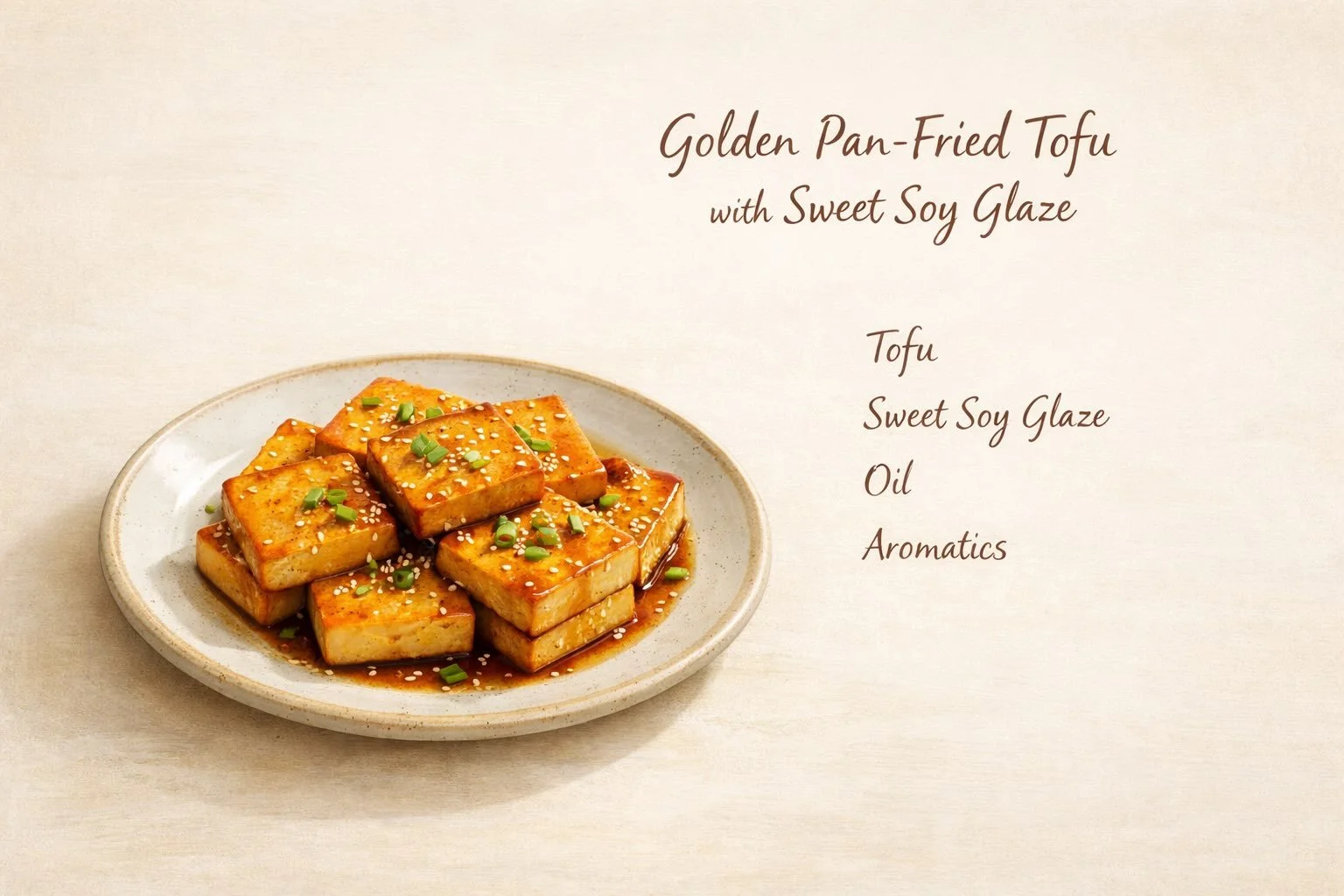
Caramelised Calm, Savoury Depth
How to Use This Dish
This is a dish framework, not a fixed recipe.
Instead of measurements, it focuses on surface control, pan logic, and sequencing — so you can adapt to your tofu, your pan, and your heat.
Good pan-frying is decided before the tofu touches the oil.
1. Dish Identity
Golden pan-fried tofu with sweet soy glaze is everyday comfort food with discipline. It’s not a stir-fry and not a braise. The tofu is cooked first to stand on its own, then finished briefly with glaze for sheen and balance.
The feeling should be reassuring and savoury, with a gentle sweetness that supports — never masks — the tofu. This is a dish for quiet evenings and simple plates.
2. Cultural & Culinary Roots
Pan-fried tofu with soy-based finishes appears across East Asian home cooking, shaped by scarcity and practicality. Browning added satisfaction; a light glaze added gloss and preservation of moisture without heaviness.
Sweet soy elements emerged not to sweeten the dish, but to round saltiness and encourage caramelisation. The tradition values timing: glaze late, heat steady, restraint always.
3. The Ingredient Logic
Primary Structure — Firm Tofu
Firm tofu holds edges and releases moisture predictably, allowing a stable crust. Softer tofu collapses before colour develops.
Browning Medium — Neutral Oil
Oil is used sparingly to conduct heat and prevent sticking, not to shallow-fry.
Finishing Element — Sweet Soy Glaze
Sweet soy provides salt, umami, and sugars for shine. It belongs at the end, where it can cling without burning.
Optional Accents — Aromatics or Seeds
Garlic, ginger, or sesame are optional and minimal. They should frame the tofu, not compete with it.
4. Structural Goal (What Success Looks Like)
This section matters most.
Exterior: evenly golden, lightly crisp at the edges
Interior: moist, clean, softly set
Glaze: thin, glossy coating without pooling
Overall: savoury-first, gently rounded with sweetness
If the glaze tastes bitter, it met heat too early.
If the tofu is pale, surface moisture wasn’t managed.
5. Cooking Logic (Sequence Over Steps)
Moisture is addressed before cooking.
Dry tofu browns; wet tofu steams.
The pan is heated steadily, not aggressively.
Tofu is left undisturbed long enough to release naturally.
The glaze is introduced last.
Sugars caramelise quickly — timing protects flavour.
This order exists because browning and glazing are different jobs.
6. Flavour Architecture
Dominant: savoury soy depth
Supporting: toasted notes from pan contact
Accent: gentle sweetness for balance and shine
Restrained: bitterness, stickiness, excess oil
Sweetness should round the edges, not lead.
7. Adaptation Window
You can adapt:
tofu cut (slabs, cubes)
sweetness source within the glaze
light finishing garnishes
You should not:
glaze early
crowd the pan
turn this into a simmer
Once the tofu stews, the dish loses its identity.
8. Common Failures & Signals
Sticking: pan or tofu not dry enough
Uneven colour: tofu moved too early
Burnt glaze: sugars introduced before browning finished
Oily mouthfeel: too much oil or low heat
Each signal points to sequencing, not ingredients.
9. When & How to Serve
Golden pan-fried tofu is best served:
hot or just warm
freshly glazed
with simple sides
It pairs naturally with:
rice or noodles
steamed greens
crisp vegetables that benefit from contrast
This is comfort without clutter.
10. Closing Reflection
Good browning is patient.
Good glazing is brief.
When tofu is allowed to colour first and shine second, it becomes quietly compelling — savoury, balanced, and complete.
Not flashy.
Just right. 🌱
