
Silken Tofu with Soy, Ginger and Spring Onion
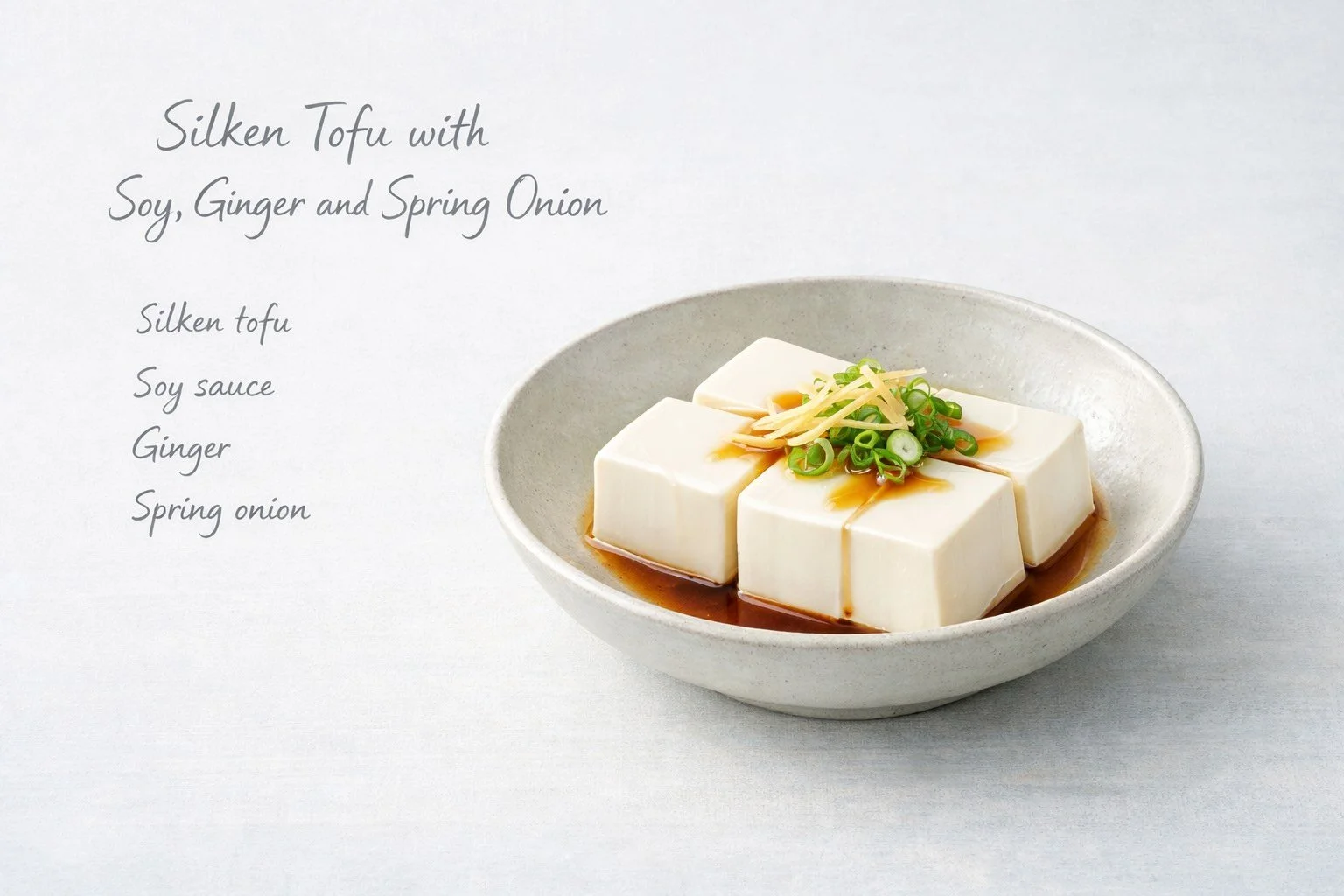
Stillness, Freshness, and the Discipline of Simplicity
How to Use This Dish
This is a serving framework, not a recipe.
There are no measurements because precision here would distract from the real work: temperature, texture, and restraint.
This dish rewards attentiveness more than technique.
1. Dish Identity
Silken tofu with soy, ginger and spring onion is a quiet, everyday dish found across East Asian home kitchens. It is not celebratory food and not designed to impress. Its purpose is refreshment — physical and mental.
This dish exists to show tofu in its most honest state. No browning, no disguise, no structural intervention. The tofu remains cool, intact, and central. Everything else is there to wake it gently.
2. Cultural & Culinary Roots
Cold or room-temperature tofu dishes developed alongside hot cuisines as a counterbalance — especially in warm, humid climates. Silken tofu, with its high water content and delicate texture, was valued for its digestibility and calm.
In Japanese and Chinese home cooking, tofu served this way is adjusted constantly: lighter in summer, saltier in winter, sharper when appetite is low. The format remains unchanged because it works.
This is tofu as refreshment, not fuel.
3. The Ingredient Logic
Primary Structure — Silken Tofu
Silken tofu is non-negotiable. Its custard-like structure is the dish. Firm tofu resists; silken tofu yields.
Seasoning Backbone — Soy Sauce
Soy sauce provides salt and fermented depth. It should season the surface lightly, never soak the tofu through.
Aromatic Lift — Fresh Ginger
Ginger adds brightness and warmth without heat. It cuts through coolness and prevents the dish from feeling inert.
Freshness & Contrast — Spring Onion
Spring onion brings bite, colour, and movement. Used sparingly, it sharpens the edges without dominating.
4. Structural Goal (What Success Looks Like)
This section matters most.
Tofu: cool, intact, trembling slightly
Seasoning: present on the surface, not pooled below
Aromatics: fresh, crisp, clearly defined
Overall: refreshing, light, and complete
If the tofu weeps excessively, it was cut too early.
If the dish tastes flat, the temperature was ignored.
5. Cooking Logic (Sequence Over Steps)
There is no cooking — but there is order.
The tofu is kept cold until the last moment.
It is cut cleanly to preserve structure.
Seasoning is applied just before serving.
This order exists because silken tofu deteriorates quickly once disturbed. Timing protects texture.
6. Flavour Architecture
Dominant: clean soybean sweetness
Supporting: gentle salt and fermentation
Accent: sharp freshness from ginger and spring onion
Restrained: oil, acidity, sweetness
Oil is optional and minimal.
Sweetness dulls the dish and is avoided.
7. Adaptation Window
You can adapt:
soy sauce type (light, tamari)
ginger cut (fine shred or micro-grate)
onion intensity
You should not:
press the tofu
over-season
serve it warm
Once heat enters, the dish loses its identity.
8. Common Failures & Signals
Watery plate: tofu cut too far ahead
Muddled flavour: aromatics chopped too early
Overpowering salt: soy sauce applied too generously
Broken tofu: dull knife or rough handling
Each issue points to handling, not ingredients.
9. When & How to Serve
Silken tofu with soy, ginger and spring onion is best served:
cold or cool
immediately after assembling
as a first dish or side
It pairs naturally with:
rice
simple vegetables
heavier cooked dishes that benefit from contrast
This is a dish of pause.
10. Closing Reflection
Some dishes don’t ask to be improved.
They ask to be noticed.
Silken tofu, served this way, reminds us that flavour doesn’t always come from transformation. Sometimes it comes from restraint, freshness, and care.
Nothing is hidden here.
That’s the point. 🌱
