
Smoked Tofu Carbonara with Cashew Cream and Pepper Dust
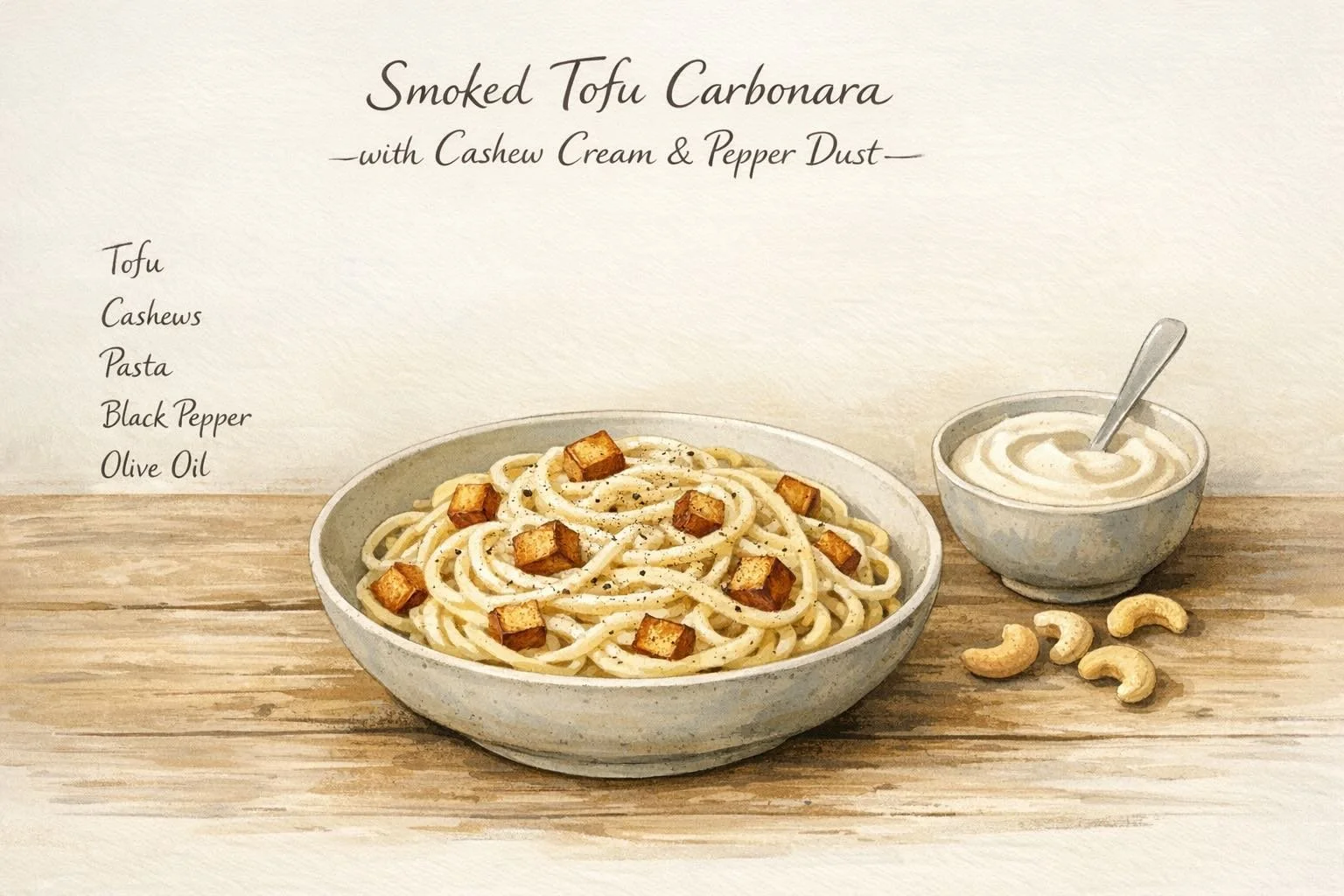
A Sensory Reimagination of Italian Comfort
How to Use This Dish
This is a dish concept, not a strict recipe.
Instead of precise measurements, the focus is on texture, heat control, and flavour balance — allowing you to adapt the dish to your pasta, tofu, and pantry.
At Tofu Kitchen, understanding the logic of a dish matters more than memorising a formula.
1. Dish Identity
This dish isn’t trying to replicate traditional carbonara.
Instead, it explores the sensory structure that makes carbonara satisfying:
creamy texture
savoury depth
pepper warmth
rich but balanced mouthfeel
Smoked tofu provides the savoury anchor.
Cashew cream supplies silkiness.
Black pepper adds aromatic lift.
Together, they recreate the experience of comfort, not the exact ingredients.
2. Culinary Roots & Modern Context
Traditional Italian carbonara is built on a simple but precise structure:
pasta + eggs + cheese + cured pork + black pepper.
The sauce forms through emulsification, where egg proteins and fat bind with pasta starch to create a creamy coating.
Plant-based versions often struggle because they chase imitation rather than structure.
This reinterpretation focuses on the same sensory architecture:
creaminess from emulsified fats
savoury notes from smoked tofu
pepper warmth
pasta starch binding everything together
When these elements are balanced, the dish feels recognisably comforting while remaining entirely plant-based.
3. The Ingredient Logic
Primary Structure — Pasta
Pasta provides the foundation. Its surface starch helps sauces cling and emulsify.
Short or long pasta both work, as long as the sauce can coat it evenly.
Savoury Depth — Smoked Tofu
Smoked tofu replaces the role traditionally played by cured pork.
It contributes:
smoky aroma
savoury protein richness
firm texture
Light browning enhances these flavours further.
Cream Body — Cashew Cream
Cashews blend into a naturally smooth cream due to their high fat content and fine particle structure.
The goal is a sauce that feels silky rather than heavy.
Water or pasta cooking liquid helps thin the cream to the right consistency.
Aromatic Lift — Pepper Dust
Freshly cracked black pepper provides the dish’s signature warmth.
Grinding pepper just before serving preserves the volatile aromatic compounds responsible for its fragrance.
4. Structural Goal (What Success Looks Like)
A well-balanced plate should deliver:
Texture: silky sauce clinging to pasta
Aroma: smoky tofu and pepper rising from the bowl
Taste: savoury, creamy, and lightly sharp
The dish should feel rich but never thick or sticky.
5. Cooking Logic (Sequence Over Steps)
Carbonara-style dishes depend on temperature control.
Cook the pasta first.
Reserve a small amount of pasta water for sauce adjustment.
Brown the smoked tofu.
Light caramelisation intensifies the savoury flavour.
Prepare the cashew cream.
Blend soaked cashews with water until completely smooth.
Combine gently.
The sauce should coat the pasta using residual heat, not aggressive boiling.
High heat risks splitting the emulsion.
6. Flavour Architecture
Dominant: creamy cashew richness
Supporting: smoky tofu savouriness
Aromatic: black pepper warmth
Restrained: salt and oil
When these layers balance properly, the dish tastes comforting yet light.
7. Adaptation Window
You can adapt:
pasta shape
tofu firmness
nut base (cashews, sunflower seeds, or macadamias)
You should not:
overcook the sauce
drown the pasta in cream
skip the pepper finish
Pepper is essential to the dish’s identity.
8. Common Failures & What They Mean
Heavy sauce: cashew cream too thick or insufficient dilution
Flat flavour: insufficient browning of tofu
Separated sauce: the sauce overheated during mixing
Muted aroma: pepper added too early rather than at serving
Each signal points to heat control and balance.
9. When & How to Serve
Best served:
immediately after mixing
with freshly cracked pepper
with a simple green salad or roasted vegetables
Works beautifully as:
a comforting weeknight dinner
a modern plant-based pasta centrepiece
a dish for introducing tofu to sceptical diners
10. Closing Reflection 🌱
Comfort food isn’t defined by tradition alone.
It comes from textures, aromas, and the quiet satisfaction of a well-balanced plate.
When smoked tofu, creamy cashew sauce, and fragrant pepper meet warm pasta, something familiar appears — even without the original ingredients.
Not imitation.
Just understanding.
And understanding is what allows plant-based cooking to feel deeply comforting.
