
Charred Tofu Steaks with Chimichurri and Roasted Veg
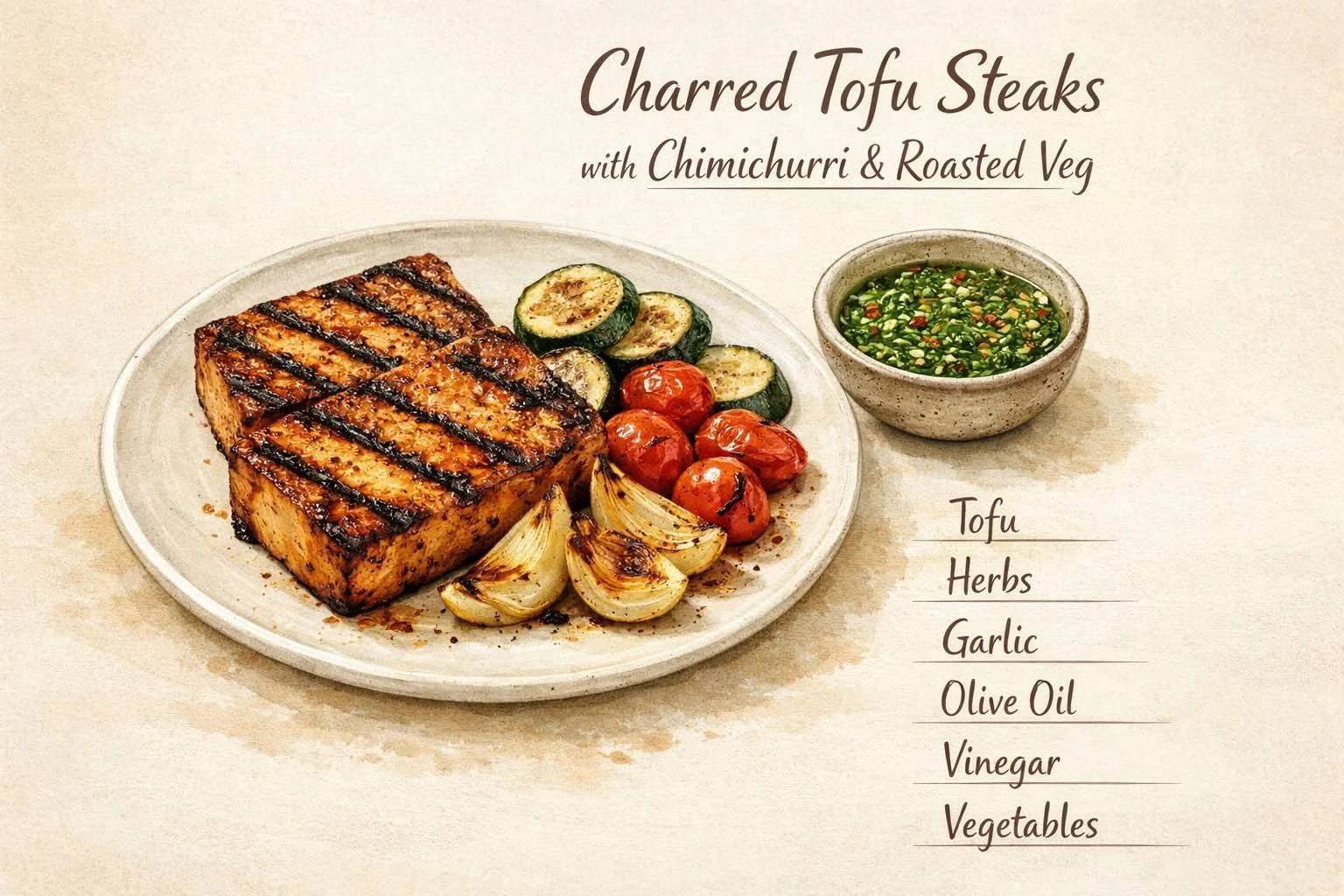
A Plant-Based BBQ Hero Built on Fire, Structure, and Contrast
How to Use This Dish
This is a dish concept, not a fixed recipe.
Instead of strict measurements, the focus is on structure, heat logic, and flavour balance — so you can adapt the dish to your grill, pan, or oven.
At Tofu Kitchen, understanding the cooking process matters more than memorising ingredients.
1. Dish Identity
This dish treats tofu like a centre-plate ingredient, not a side.
Cut thick, seared with high heat, and paired with a bright herb sauce, tofu becomes something deeply satisfying — smoky, crisp-edged, and tender inside.
The goal is not to mimic steak.
The goal is to let tofu respond to heat and fire the way it naturally does.
The result is bold enough for a barbecue but still light and vibrant.
2. Culinary Roots & Modern Context
Cooking over fire is one of the oldest culinary techniques.
Across cultures — from South American parrillas to Mediterranean grills — charred foods rely on high heat, clean ingredients, and simple sauces to create depth.
Chimichurri follows this tradition perfectly:
a raw herb sauce that cuts through grilled richness with acidity and freshness.
When applied to tofu, this pairing works beautifully.
Tofu absorbs smoke and browning on the outside, while chimichurri restores brightness and balance.
3. The Ingredient Logic
Primary Structure — Thick Tofu Steaks
Cutting tofu into thicker slabs changes how it cooks.
Instead of small pieces that crisp everywhere, steaks allow:
a charred exterior
a moist interior
clear contrast between textures
Firm or extra-firm tofu works best for this structure.
Heat Companion — Roasted Vegetables
Roasted vegetables provide a warm, caramelised base.
They echo the same browning logic as the tofu:
dry heat
natural sugars
slow surface caramelisation
This creates flavour harmony across the plate.
Bright Counterpoint — Chimichurri
Chimichurri’s role is to balance.
It provides:
herbaceous freshness
garlic aromatics
vinegar acidity
olive oil richness
The sauce should wake up the tofu, not drown it.
4. Structural Goal (What Success Looks Like)
This dish succeeds when the three elements stay in balance.
Exterior: dark golden or lightly charred crust
Interior: moist, gently structured tofu
Overall Plate: smoky, fresh, and vibrant — never heavy
If the tofu tastes steamed rather than charred, the heat wasn’t strong enough.
5. Cooking Logic (Sequence Over Steps)
The key principle here is heat management.
Dry the tofu first.
Surface moisture blocks browning.
Season lightly before cooking.
Salt enhances flavour but shouldn’t draw out too much water.
Use decisive heat.
High heat encourages the Maillard reaction — the chemical process where amino acids and sugars create deep savoury flavour.
Let the tofu sit.
Moving it too soon prevents crust formation.
Sauce after cooking.
Herb sauces belong on finished food, not during cooking.
6. The Maillard Reaction (Why Char Creates Flavour)
The Maillard reaction is the chemical engine behind grilled flavour.
When proteins and natural sugars encounter temperatures above roughly 140°C, they transform into hundreds of new flavour compounds.
For tofu, this means:
deeper savoury notes
toasted aromas
visible char and colour
But moisture interferes with this process.
As long as surface water remains, heat energy is spent evaporating water instead of browning the surface.
That’s why drying tofu — and using strong heat — matters so much.
7. Flavour Architecture
Dominant: smoky char and savoury tofu
Supporting: herb brightness and vinegar acidity
Restrained: oil and sweetness
This dish works when the flavours feel fresh after the first bite, not heavy.
8. Adaptation Window
You can adapt:
grill, cast-iron pan, or oven broiler
herbs in the chimichurri (parsley, coriander, oregano)
vegetable combinations
You should not:
cook tofu over low heat
crowd the pan or grill
coat the tofu heavily in sauce before searing
These choices weaken the char and dull the flavour.
9. Common Failures & What They Mean
Pale tofu: heat too low or surface still wet
Sticking to the pan: tofu moved before the crust formed
Greasy surface: excess oil instead of heat
Muted flavour: sauce added too early or insufficient seasoning
Each failure points to heat management, not ingredient quality.
10. When & How to Serve
Best served:
hot from the grill or pan
chimichurri spooned over just before serving
with roasted vegetables or simple grains
Works beautifully as:
a BBQ centrepiece
a summer dinner plate
a shareable plant-based main
Closing Reflection 🌱
Cooking tofu over fire changes how people see it.
When heat, dryness, and patience come together, tofu develops colour, aroma, and depth that feel surprisingly bold.
Paired with fresh herbs and bright acidity, the dish becomes balanced rather than heavy.
It’s proof that tofu doesn’t need disguise.
Sometimes all it needs is fire, understanding, and a good sauce.
