
Sesame Tofu – A Creamy, Nutty, High-Calcium Alternative
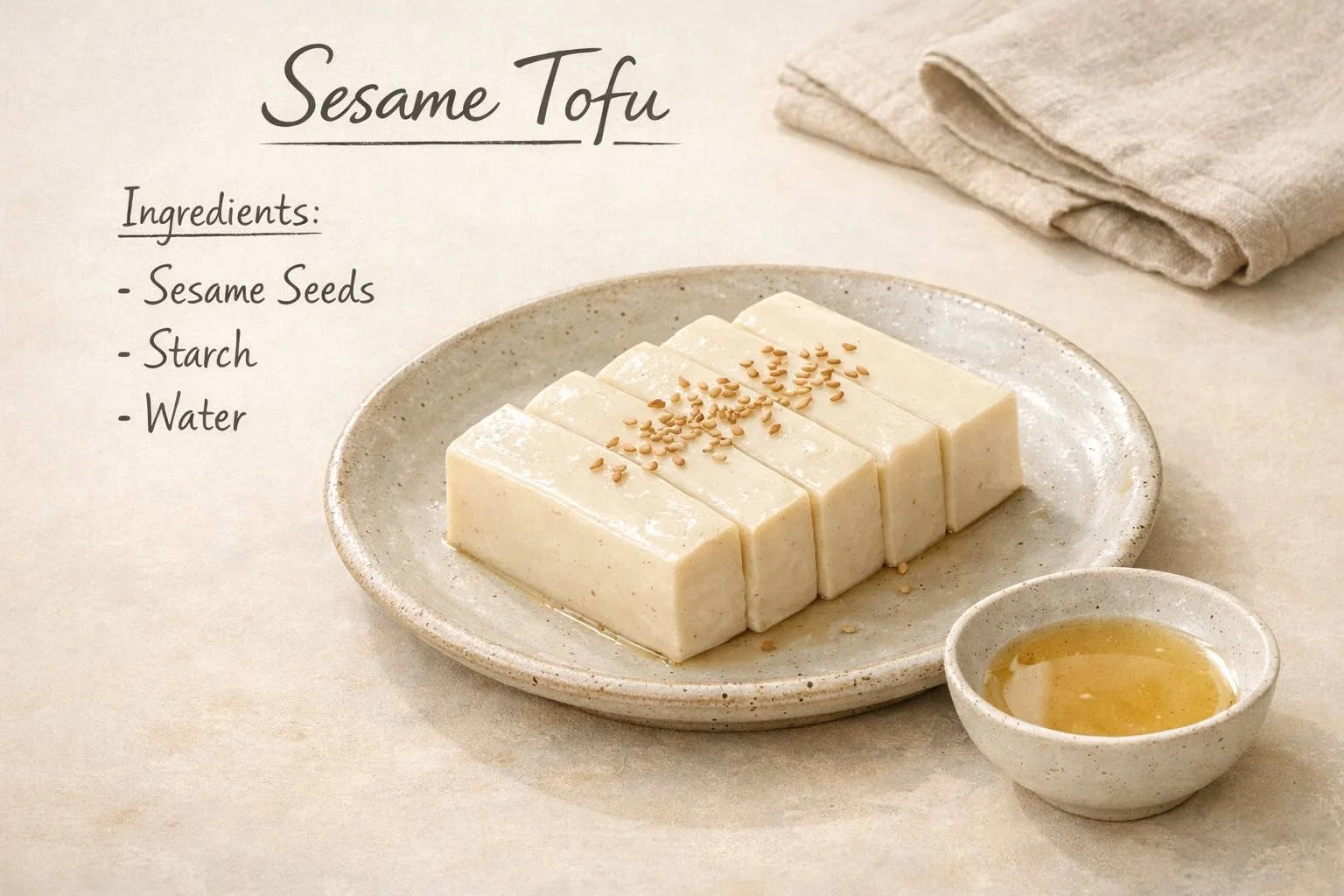
Sesame Tofu, Explained Simply
Despite its name, sesame tofu isn’t tofu in the soy sense. There’s no soy milk, no curdling, and no pressing. Instead, sesame tofu—often called goma dōfu—is a smooth, starch-set emulsion made from ground sesame seeds, water, and gentle heat.
Enjoyed for centuries in Japanese temples and home cooking, it’s creamy like custard yet savoury and composed. It’s tofu defined by texture and technique, not imitation.
How Sesame Tofu Sets (The Food Science Bit)
Sesame tofu is not a protein curd; it’s a starch-thickened emulsion.
What’s happening:
Sesame seeds are ground into a paste
The paste is diluted with water or light stock
Starch is added and heated gently
Starch gelatinises while sesame oils emulsify into the matrix
The result is a glossy, spoonable gel that:
Feels creamy without dairy
Holds clean edges when chilled
Stays tender rather than rubbery
Patience—and steady stirring—are the structure here.
Starch Choice Matters (Quietly)
Traditionally, sesame tofu is set with hon-kuzu (kuzu starch). It produces a smooth, elastic gel with a refined, melting finish.
Many modern kitchens use potato starch instead. It works well, but the texture is typically firmer and slightly more “mochi-like.” Both are valid; the choice simply nudges the final mouthfeel in different directions.
A Brief Cultural Note: Calm by Design
In shōjin ryōri (Japanese Buddhist vegetarian cuisine), sesame tofu is valued for its grounding quality. Historically, its preparation—often involving long, attentive grinding—was as much about presence as outcome.
It’s commonly served:
Chilled and sliced
Warm and spoonable
With simple accompaniments like light soy/tamari or clear broths
The dish is meant to slow the meal down.
Nutritional Perspective: Calcium, With Context
Sesame seeds are naturally rich in calcium, which carries through—diluted—into sesame tofu.
A calm clarification:
Content vs absorption: Sesame contains oxalates and phytates that can bind minerals, so not all the calcium present is absorbed.
Traditional techniques help: Toasting or dehulling sesame seeds can reduce these compounds and improve mineral availability.
Practical takeaway: Sesame tofu offers a whole-food source of calcium, while calcium-set soy tofu may provide more readily absorbed calcium due to its coagulant.
Both have a place. The choice depends on preference, tolerance, and texture—not absolutes.
Flavour & Texture: What to Expect
Sesame tofu is rich—but restrained.
Texture:
Ultra-smooth and glossy
Creamy and dense
Spoonable warm, sliceable chilled
Flavour:
Deep sesame aroma
Nutty and savoury
Clean, lingering finish
It pairs beautifully with:
Light soy or tamari
Wasabi or fresh ginger
Scallions and sesame oil
Clear, gentle broths
Less does more.
Ingredient Awareness
A simple note for sensitive eaters:
Sesame tofu is soy-free and dairy-free, but sesame is a major allergen for some people.
If avoiding specific allergens, choose clearly labelled products and simple ingredient lists.
Kept straightforward, this keeps the dish enjoyable and inclusive.
How to Serve Sesame Tofu Well
Classic serving styles:
Chilled slices with a light sauce
Warm spoonfuls in a shallow bowl
Neatly cubed and dressed sparingly
Tips for best results:
Stir constantly while cooking to prevent scorching
Keep the heat gentle—avoid hard boiling
Let it rest before slicing for clean edges
Avoid heavy acids or overpowering toppings that mask the sesame.
Sesame Tofu vs Soy Tofu: A Clear Comparison
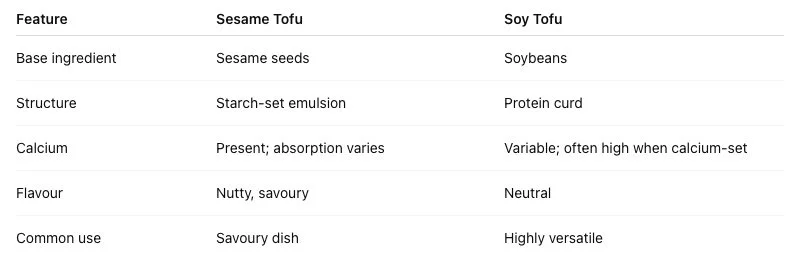
They share a name—but not a method.
Who Is Sesame Tofu For?
Sesame tofu suits:
People avoiding soy
Those seeking creamy, savoury textures
Cooks interested in traditional techniques
Anyone who values calm, mineral-rich whole foods
It’s especially fitting where gentleness and depth matter more than volume.
Final Takeaway 🌱
Sesame tofu shows how nourishment can be quiet and deliberate. When whole ingredients, thoughtful technique, and time come together, the result is comfort with clarity—one smooth, grounding spoonful at a time.
