
Beginner’s Guide to Tofu Terms: Everything You Need to Know
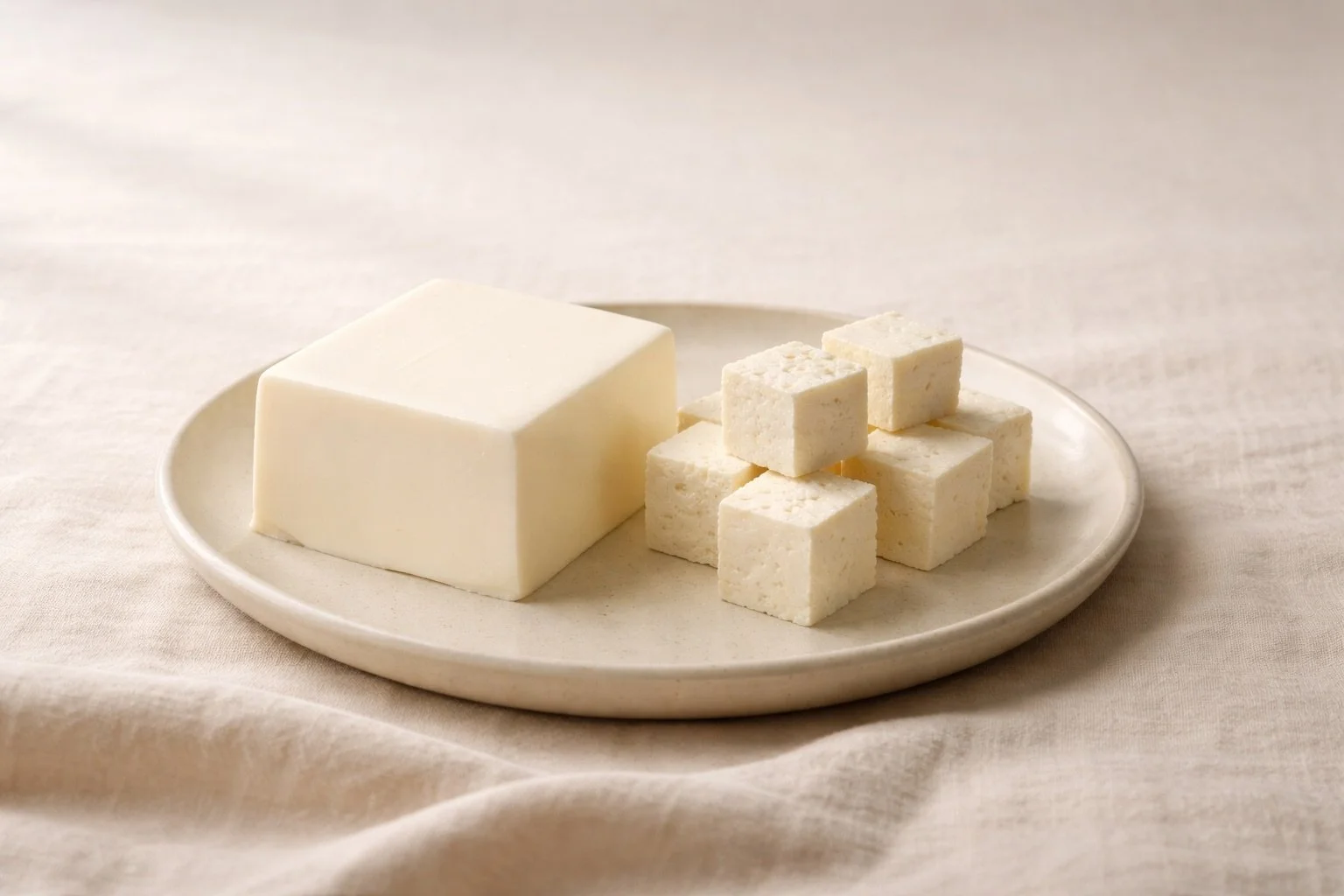
Why This Guide Exists
Tofu itself is simple.
Soybeans. Water. A coagulant.
But the way we talk about tofu—silken, firm, pressed, set, curdled, frozen—can make it feel more complex than it is.
This guide is here to remove that friction.
Not to overwhelm you with definitions, but to give you a working language—so when you read a recipe, walk into a shop, or try something new, you understand what’s actually happening.
The Core Idea: What Tofu Actually Is
Before the terms, one grounding idea:
Tofu is a protein–water gel.
A network of soy proteins holding water in place.
That’s it.
Everything else—texture, firmness, behaviour in cooking—comes from how tightly that network is formed and how much water it holds.
These terms aren’t just labels—they describe how water is held inside the tofu, which directly determines how it behaves when cooked.
Once you understand this, most tofu terms stop being confusing.
They become logical.
The Essential Tofu Terms (Explained Simply)
1. Silken Tofu (Soft Tofu)
What it means:
Tofu that is set directly in its container without pressing.
Texture:
Smooth, delicate, custard-like.
What’s happening:
The protein network is very loose, holding a high amount of water.
How to use it:
Soups
Steaming
Blending (desserts, sauces)
Gentle dishes where structure isn’t the focus
Key insight:
This tofu is not meant to be handled aggressively. It’s about softness, not structure.
2. Firm / Medium / Extra-Firm Tofu
What it means:
Tofu that has been pressed to remove water.
Texture spectrum:
Medium → tender but holds shape
Firm → balanced structure
Extra-firm → dense and robust
What’s happening:
Pressing removes water, tightening the protein network.
How to use it:
Stir-fries
Pan-searing
Grilling
Baking
Key insight:
Less water means stronger structure—and better conditions for browning.
3. Pressed Tofu
What it means:
Tofu that has had additional water removed manually or during production.
Texture:
Denser, chewier, more compact.
What’s happening:
Water is physically removed, allowing the surface to heat more effectively during cooking.
Why it matters:
Drier surfaces heat faster and brown more easily.
Key insight:
Pressing doesn’t make tofu absorb more flavour—it helps it cook better.
4. Fresh Tofu vs Packaged Tofu
Fresh tofu:
Often sold in water trays
Softer, more delicate
Short shelf life
Packaged tofu:
Vacuum sealed or boxed
More stable
Consistent texture
Key insight:
Fresh tofu prioritises immediacy and delicacy.
Packaged tofu prioritises consistency and convenience.
5. Coagulant (What Sets Tofu)
What it means:
The ingredient that turns soy milk into tofu.
Common types:
Nigari → smooth, slightly tender
Gypsum → firmer, more structured
GDL → very smooth (often for silken tofu)
Acids → softer, more fragile curds
What’s happening:
The coagulant causes soy proteins to link together and form a gel.
Key insight:
Different coagulants shape the texture before any pressing even begins.
6. Freezing Tofu
What it means:
Tofu that has been frozen and thawed.
Texture:
Spongy, porous, chewy.
What’s happening:
Ice crystals expand the structure, creating holes throughout the tofu.
How to use it:
Braised dishes
Saucy dishes
When you want more absorption
Key insight:
Fresh tofu doesn’t absorb marinade deeply. Most flavour stays on the surface—unless the structure is changed, like freezing.
7. Dried Tofu (Bean Curd Sheets / Sticks)
What it means:
Tofu that has been dehydrated or formed from soy milk skin (yuba).
Texture:
Chewy, layered, sometimes meaty.
What’s happening:
Water is removed almost entirely, concentrating the structure.
How to use it:
Rehydrated in soups
Stir-fries
Braises
Key insight:
This isn’t softer tofu—it’s tofu transformed.
Why Some Tofu Crisps—and Some Doesn’t
Tofu doesn’t brown until its surface dries.
As long as water is present, heat is held back—so the tofu steams instead of sears.
That’s why firmer, drier tofu tends to crisp more easily, while softer tofu stays pale and delicate.
How to Use These Terms in Real Cooking
Instead of memorising everything, think in three simple questions:
How much water does this tofu hold?
→ Determines texture and browningHow strong is its structure?
→ Determines how you can handle itWhat cooking method suits it?
→ Gentle (silken) vs high heat (firm)
That’s all you need.
Common Beginner Confusion (Cleared Up)
“Is tofu supposed to taste like something?”
→ No. It carries flavour rather than dominating it.“Do I need to marinate tofu for hours?”
→ Not usually. Surface seasoning and cooking matter more.“Why isn’t my tofu crispy?”
→ Too much moisture is blocking heat.“Is all tofu the same?”
→ No. Texture defines behaviour.
Final Takeaway 🌱
Tofu isn’t complicated.
But language can make it feel that way.
Once you understand a few simple terms—soft, firm, pressed, frozen—you stop guessing.
You start choosing.
And from there, cooking tofu becomes less about following rules and more about recognising what’s already in front of you.
Tofu doesn’t need decoding.
It just needs understanding.
