
The Best Aromatics for Tofu — And When to Use Them
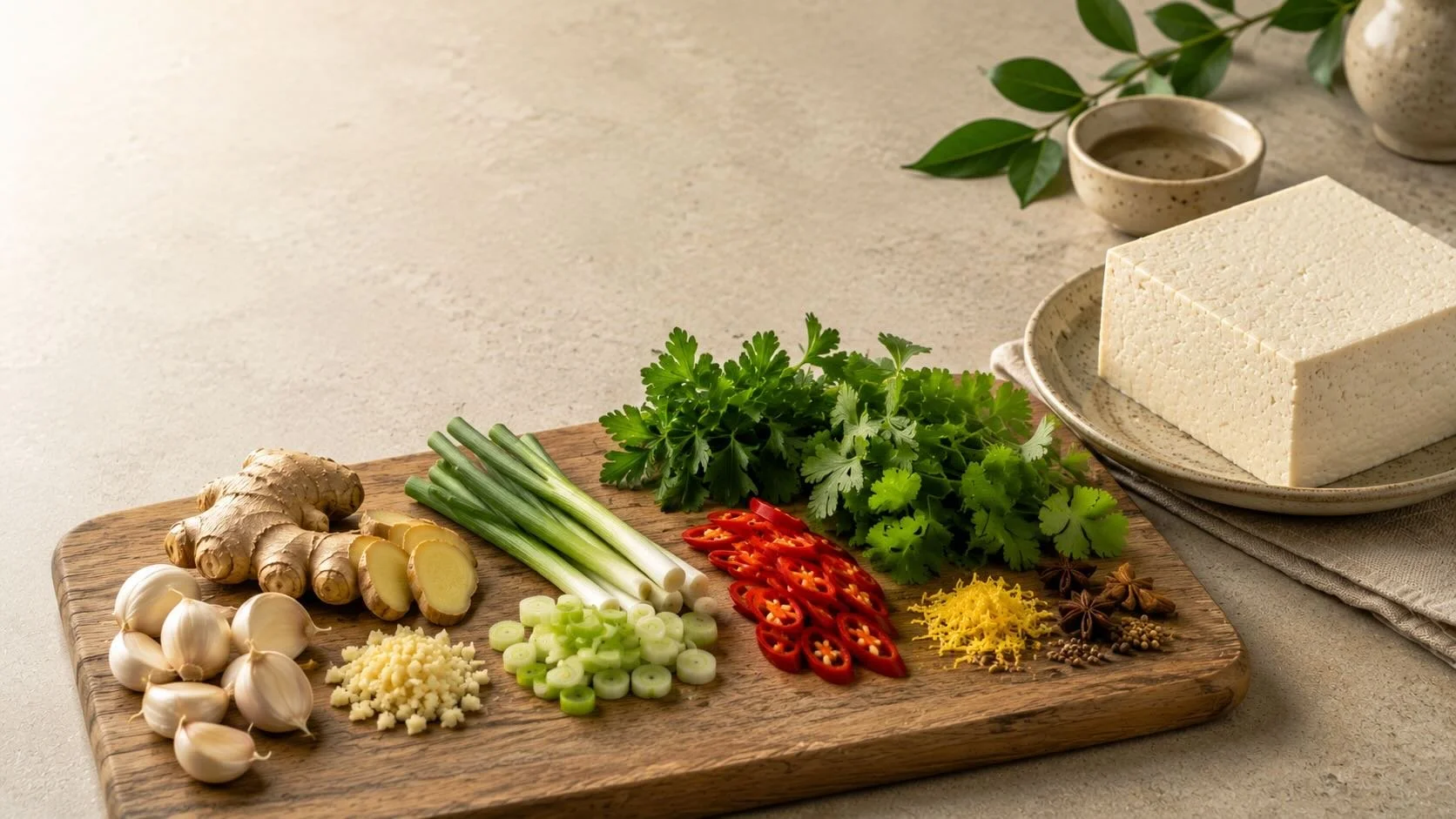
Tofu is often praised for its ability to work with almost any flavour. While sauces and seasonings usually get most of the attention, aromatics are often the real foundation of a memorable tofu dish.
Garlic, ginger, spring onions, chillies, herbs, spices, and citrus zest do more than add flavour. They create aroma — the scents released during preparation and cooking that strongly influence how food tastes.
Understanding which aromatics work best with tofu and when to add them can help you create dishes that taste deeper, fresher, and more balanced.
What Are Aromatics?
Aromatics are ingredients that release fragrant compounds during preparation or cooking.
Common examples include garlic, ginger, onion, shallots, spring onions, chillies, fresh herbs, whole spices, and citrus zest.
While soy sauce provides saltiness and umami, aromatics provide character. They are the difference between plain tofu with sauce and tofu that smells inviting before it even reaches the table.
Much of what we recognise as flavour comes from retronasal aroma — volatile compounds travelling from the mouth to the nose during eating. Taste buds detect basic tastes such as sweet, salty, sour, bitter, and umami, but aroma gives food much of its personality.
Why Tofu Benefits From Aromatics
Fresh tofu has a mild flavour, which makes it an excellent base for aromatics. Rather than competing with garlic, ginger, herbs, or spices, tofu allows them to stand out.
Because tofu contains plenty of water, most aromatic compounds remain near the surface rather than deeply penetrating the centre of the block. This is why cooking methods such as pan-frying, roasting, grilling, and glazing often create stronger flavour than simply marinating tofu for a long time.
If you do marinate tofu, keep it refrigerated and avoid leaving it at room temperature for extended periods.
A Simple Cooking Order for Aromatics
Different aromatics cook at different speeds. Adding everything to the pan at once can lead to burnt garlic, bitter spices, or herbs that lose their freshness.
A useful cooking order is:
Whole spices, such as cumin seeds, mustard seeds, or fennel seeds
Onions, shallots, ginger, or spring onion whites
Garlic and ground spices
Fresh herbs and delicate greens
Citrus zest and fresh garnishes
This sequence helps each ingredient develop flavour without overcooking the more delicate aromatics.
Four Ways to Help Flavour Stick
Tofu’s water-rich structure means most flavour stays near the surface. These simple techniques help aromatics, sauces, and seasonings cling more effectively.
Press and Dry
Removing excess surface moisture helps tofu brown better and allows sauces to cling. Firm and extra-firm tofu benefit the most from pressing.
Hot Salt-Water Soak
Pour hot salted water over firm or extra-firm tofu and leave it for 10–15 minutes before cooking. A simple brine made with 1–2 tablespoons of salt dissolved in 500 mL of hot water works well for most blocks of tofu.
The heat gently firms the outer surface while the salt helps draw excess moisture from the exterior. After draining, the tofu dries more readily during cooking, helping it brown evenly while staying tender inside.
Freeze and Thaw
Freezing changes tofu’s internal structure, creating a more porous, sponge-like texture after thawing. This helps sauces and seasonings become trapped in the tofu, giving a stronger flavour impact and a chewier bite.
Glaze After Browning
After tofu is browned, add a sauce or glaze to the hot pan. As the liquid reduces, flavour concentrates on the surface and creates a more intensely seasoned coating.
Garlic: Savoury Depth
Garlic is one of tofu’s most versatile aromatic partners. It works well in stir-fries, marinades, sauces, roasted tofu, grilled tofu, and baked tofu.
When gently cooked, garlic becomes sweeter and milder. When cooked too hard, it can quickly become bitter.
Garlic cooks faster than onions, ginger, or spring onion whites because it contains less water and is often cut into small pieces. For deeper savoury flavour, add garlic after denser aromatics have softened. For a fresher garlic flavour, stir it into sauces or add it during the final minute of cooking.
Roasted garlic is especially useful in tofu dips, dressings, spreads, and mashed tofu recipes.
Ginger: Freshness and Warmth
Ginger brings freshness, gentle heat, citrus-like brightness, and warm complexity. It pairs especially well with soy sauce, sesame oil, spring onions, and chilli.
Fresh ginger tastes bright and sharp. As it cooks, that sharpness softens and develops into warmer, sweeter notes.
For stir-fries, cook sliced or minced ginger near the beginning with other dense aromatics. For dressings and sauces, use freshly grated ginger for a brighter flavour. For soups and broths, let ginger simmer longer so it gently infuses the liquid.
Spring Onions: Light and Fresh
Spring onions offer a cleaner, lighter flavour than regular onions. They are especially good with silken tofu, cold tofu appetisers, noodle bowls, rice bowls, and light stir-fries.
The white and green parts behave differently.
The white sections are more pungent and benefit from cooking, which develops sweetness and depth. The green sections are more delicate and lose flavour quickly when overcooked, so they are best added near the end or used raw as a garnish.
Using both parts at different stages creates a more layered flavour.
Chillies, Herbs, Spices, and Citrus
Chillies add more than heat. Fresh chillies bring brightness and fruitiness, while dried chillies create deeper, more concentrated flavour. Add fresh chillies later for a fresher taste, and briefly toast dried chillies earlier to build depth.
Fresh herbs such as coriander, Thai basil, mint, parsley, dill, and chives can dramatically change the personality of a tofu dish. Most are best added at the end of cooking, as a garnish, or in dressings and sauces. Long cooking can reduce their delicate aroma.
Whole spices such as cumin seeds, coriander seeds, fennel seeds, mustard seeds, star anise, cinnamon, and Sichuan peppercorns create a deeper aromatic base. Briefly toasting them in oil helps release their fragrant oils. Moderate heat is usually enough; very high heat can scorch spices and make them bitter. Neutral oils such as canola, sunflower, peanut, or avocado oil are often preferred because they let the spice flavours stand out.
Citrus zest is an underrated aromatic. Lemon, lime, and orange zest provide fragrant oils without making a dish sharply acidic. Add zest at the end of cooking, into dressings, into marinades, or as a finishing garnish.
Simple Aromatic Combinations
For an East Asian direction, try garlic, ginger, spring onion, and sesame oil.
For a Mediterranean direction, use garlic, lemon zest, parsley, and oregano.
For a Southeast Asian direction, combine ginger, chilli, lime zest, and fresh herbs.
For a Middle Eastern direction, try garlic, parsley, mint, and sumac.
For a smoky roasted flavour, use roasted garlic, smoked paprika, lemon zest, and olive oil.
These combinations give tofu a clear flavour direction without overwhelming it.
Common Mistakes
The first mistake is adding delicate herbs too early. Fresh herbs often lose their brightest flavour when cooked for too long.
The second is burning garlic. Garlic cooks faster than most aromatics and can quickly become bitter over high heat.
The third is adding everything at once. A simple cooking order helps prevent burnt garlic, scorched spices, and faded herbs.
The fourth is using too many aromatics. Two or three carefully chosen ingredients often work better than six or seven competing flavours.
Finally, remember balance. Aromatics enhance tofu, but they do not replace salt, acidity, fat, or umami. Good tofu dishes usually need all of these elements working together.
Final Takeaway
Great tofu dishes often begin with great aromatics. Garlic builds savoury depth, ginger brings freshness, spring onions add lightness, herbs provide brightness, spices create complexity, chillies add character, and citrus zest lifts the whole dish.
The key is not only choosing the right aromatic but also adding it at the right stage of cooking. When you understand how aromatics behave — and how tofu’s texture affects flavour — even simple tofu dishes can taste balanced, fragrant, and deeply satisfying.
