
Why Tofu Works So Well With Fermentation
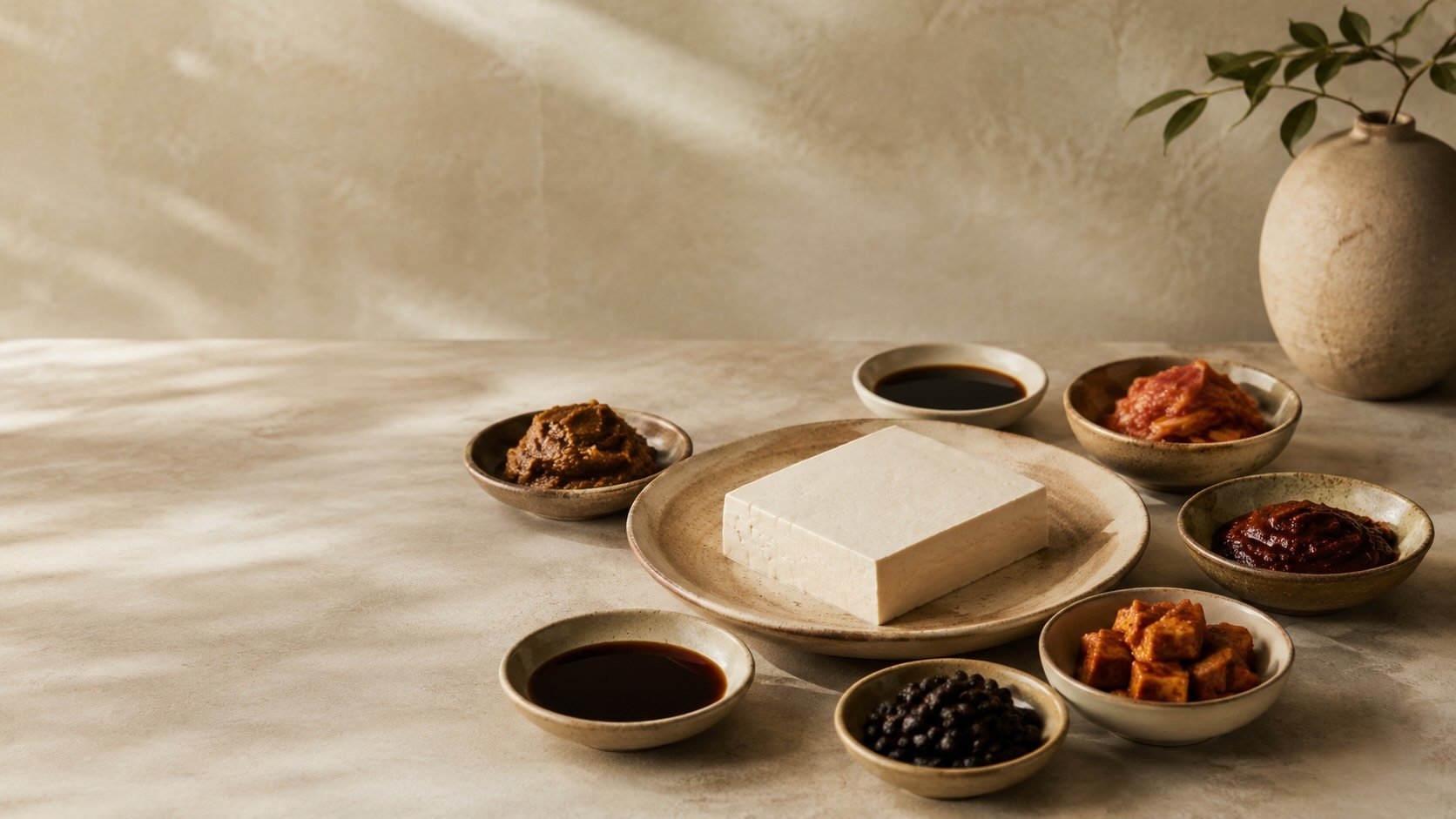
Fermentation gives food direction.
It turns simple ingredients into something deeper, sharper, richer, and more complex. Soy sauce, miso, doubanjiang, sufu, kimchi, fermented black beans, and vinegar ferments all show how time, salt, microbes, and careful processing can transform flavour.
Tofu works beautifully with these foods because it plays a different role.
Tofu provides structure while fermentation provides direction.
Tofu brings body, softness, moisture, protein, and calmness. Fermented foods bring umami, salt, acidity, aroma, heat, and depth. Together, they create balance.
This is why tofu appears so naturally beside fermented ingredients across East Asian cooking and beyond.
Tofu Is Not an Empty Sponge
To understand this pairing, it helps to understand tofu itself.
Fresh tofu is not a dry sponge waiting to soak up flavour. It is a hydrated soy protein gel. Its structure is already filled with water, so flavour does not instantly travel deep into the centre during a cold marinade.
Most flavour develops through surface contact, cooking, coating, simmering, and reduction.
That is why tofu often tastes better when it is simmered in sauce, pan-fried before glazing, warmed in broth, or coated with a concentrated dressing. The tofu gives the dish shape. The fermented ingredient gives it direction.
Soy Sauce: Clean Savoury Depth
Soy sauce is one of the easiest ways to show tofu's strength.
It brings salt, umami, aroma, and colour without needing many extra ingredients. Because tofu is mild, soy sauce does not have to fight for attention. Its savoury flavour stays clear.
A simple plate of pan-fried tofu with soy sauce, ginger, and spring onion works because it has balance: substance from tofu, depth from soy sauce, and lift from aromatics.
For stronger results, brown the tofu first, then add soy sauce near the end. This allows the sauce to coat and reduce slightly instead of steaming the tofu from the beginning.
Miso: Gentle Richness and Roundness
Miso brings a softer kind of fermentation.
It can be sweet, earthy, salty, nutty, or deeply savoury depending on the type. With tofu, miso works especially well because it adds roundness rather than sharpness.
White miso can bring sweetness and softness. Red or darker miso brings more depth and intensity.
Miso is excellent in soups, glazes, dressings, marinades, braises, and creamy sauces. The main rule is to avoid scorching it. Miso contains fermented solids and natural sugars that can catch over high heat. Cook the tofu first, then add a miso glaze near the end so it becomes glossy rather than burnt.
Doubanjiang: Fermented Heat With Purpose
Doubanjiang is a fermented chilli and broad bean paste best known in Sichuan cooking.
It is not just spicy. It is salty, savoury, aromatic, and complex. Tofu is one of its best partners because tofu softens the heat and gives the sauce structure.
This is why Mapo Tofu works so well. The tofu carries the fermented chilli paste, aromatics, oil, and sauce without competing with them.
For best results, fry doubanjiang gently in oil first. This helps release its colour and aroma into the oil, allowing the flavour to move through the whole dish instead of sitting harshly on the surface.
Sufu: When Tofu Becomes Fermented
Sufu, also called fermented bean curd, is one of the clearest examples of tofu and fermentation becoming one.
It begins as tofu, then changes through fermentation and ageing. During fermentation, enzymes produced by beneficial microbes break down proteins and fats into smaller flavour compounds. The result is creamy, salty, aromatic, and deeply savoury.
Sufu can taste intense on its own, but a small amount can transform braised greens, congee, noodle sauces, hot pots, tofu sauces, and roasted vegetables.
Use it like a powerful seasoning, not like ordinary tofu. Start small, mash it into a sauce, then taste before adding more.
Kimchi, Black Beans, and Vinegar Ferments
Kimchi brings acidity, chilli, garlic, fermentation, and crunch. Tofu brings softness and calm. Together, they create contrast: sharp with gentle, spicy with mild, lively with steady.
Try warm tofu with chopped kimchi, sesame oil, spring onion, and toasted sesame seeds. For deeper flavour, simmer firm tofu with kimchi and broth, then add a little fresh kimchi at the end for brightness.
Fermented black beans work differently. They are intensely savoury, salty, and aromatic, so a small amount can season a whole dish. Crush or rinse them depending on how strong they are, then fry briefly with garlic, ginger, or chilli before adding tofu and liquid.
Vinegar ferments bring lift. Rice vinegar, black vinegar, and other fermented vinegars can make tofu taste cleaner and more complete. Add vinegar late so its brightness stays clear.
How to Make the Pairing Work Better
Good tofu and fermented food pairings depend on technique, not just ingredients.
For crisp tofu, press firm or extra-firm tofu before pan-frying, roasting, grilling, or air-frying. Removing surface moisture helps browning.
For saucy dishes, soups, curries, and braises, pressing is often unnecessary. Unpressed tofu can stay softer and more receptive to the surrounding broth.
For deeper seasoning, a short hot salted-water soak can help. Pour hot salted water over firm tofu and leave it for 10–15 minutes before cooking. A common starting point is 1–2 tablespoons of salt in 500 mL hot water. Heat helps firm the surface, while salt draws out some moisture and lightly seasons the tofu. Drain before cooking.
For a more sponge-like texture, freeze tofu, thaw it in the fridge, then gently squeeze out excess water. Freezing changes the structure, creating pockets that hold sauces more readily. This is useful for braises, stews, and bold marinades.
Common Mistakes
Using Too Much Fermented Ingredient
Fermented foods are concentrated. Start with less than you think. You can always add more soy sauce, miso, sufu, doubanjiang, or black beans later.
Burning the Sauce
Many fermented condiments contain proteins, sugars, and solids that can burn over high heat. Brown the tofu first, then glaze or simmer at a gentler heat.
Expecting Marinade to Do Everything
Cold marinade only seasons tofu slowly and mostly near the surface. For a stronger flavour, cook the tofu with the sauce, reduce the sauce, or glaze the tofu after browning.
Forgetting Freshness
Fermented foods bring depth, but depth needs balance. Fresh herbs, spring onion, ginger, chilli, citrus, cucumber, leafy greens, or vinegar can stop the dish from becoming too heavy.
Final Takeaway
Tofu and fermentation work together because they do different jobs.
Tofu provides structure, softness, protein, moisture, and balance.
Fermented foods provide direction: umami from soy sauce, roundness from miso, heat from doubanjiang, creamy intensity from sufu, brightness from kimchi, depth from black beans, and lift from vinegar.
The secret is not making tofu taste like something else.
The secret is letting tofu become the foundation that carries flavour clearly.
Tofu gives the dish a body. Fermentation gives it a voice.
