
Cooking Without Recipes (Part 3): Cooking With Confidence
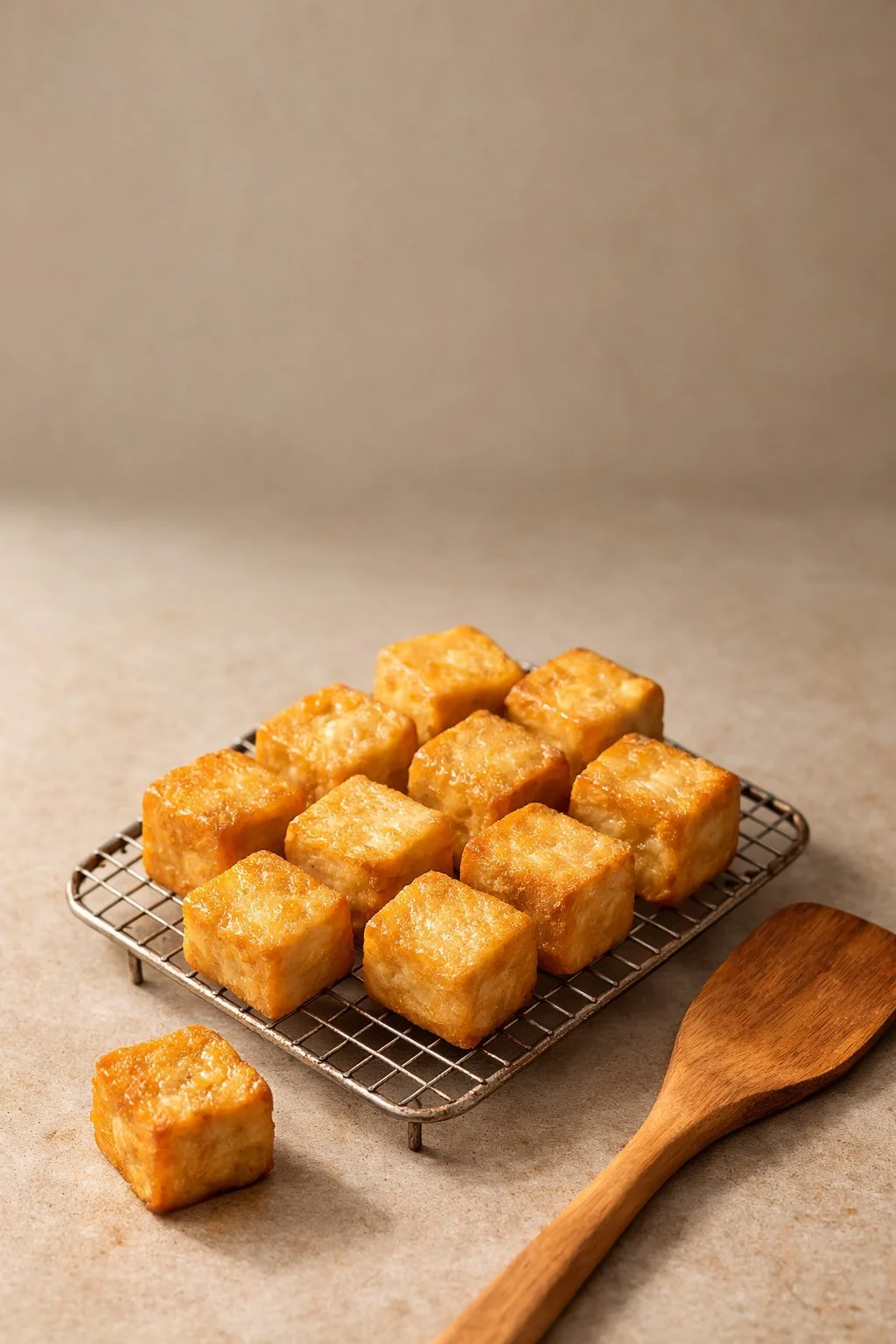
Series: Cooking Without Recipes
A practical guide to developing kitchen intuition — learning to notice change, trust your senses, and build flavour with confidence using tofu as a training ingredient.
Articles in this series
• Cooking Without Recipes (Part 1): Developing Kitchen Intuition
• Cooking Without Recipes (Part 2): Training Your Senses
• Cooking Without Recipes (Part 3): Cooking With Confidence
• How to Layer Flavours Like a Chef — No Recipe Required
Confidence Is the Moment You Decide
In Part 1, we learned to pay attention.
In Part 2, we trained the senses that reveal what food is doing while it cooks.
But awareness alone isn’t enough.
At some point, cooking requires a decision.
You must choose when to:
• lower the heat
• leave something undisturbed
• flip it — or not
• add seasoning
• declare it ready
This is where hesitation often appears.
Not because cooks know nothing, but because they have not yet learned to trust what they know.
Confidence in the kitchen is simply the moment you decide to act.
From Noticing to Acting
When you begin cooking intuitively, your questions slowly change.
Instead of asking:
“Am I doing this correctly?”
You begin asking:
“What does this need right now?”
That shift transforms cooking.
You are no longer following instructions. You are responding to the ingredient itself.
Because tofu reacts calmly and predictably, it becomes a safe place to practise this transition. Small decisions rarely ruin the dish. Instead, they reveal what happens next.
And that feedback builds trust.
Why Tofu Builds Decision-Making Muscles
Tofu is often described as forgiving.
But what makes it valuable for learning is clarity.
It changes gradually.
It responds predictably.
It improves with restraint.
Each small decision creates a lesson.
Leave it longer → you learn patience.
Move it too soon → you learn timing.
Season late → you learn balance.
Confidence does not come from avoiding mistakes.
It comes from understanding that mistakes are information.
Knowing When to Stop
One of the hardest skills in cooking without recipes is recognising when nothing more is needed.
Many cooks keep adjusting — stirring, flipping, seasoning — long after the food has reached its ideal state.
Tofu teaches restraint.
There is a quiet moment when:
• steam begins to subside
• surfaces stabilise
• the texture holds its shape
Nothing dramatic signals this moment.
But experienced cooks recognise it.
And instead of intervening again, they simply allow the food to finish.
Confidence often means doing less, not more.
Substitution Without Stress
Another sign of growing confidence appears when something is missing.
A recipe might call for a specific ingredient that isn’t available. In rigid cooking, this becomes a problem.
In intuitive cooking, it becomes a question:
What role does this ingredient play?
Is it providing:
• salt
• acidity
• texture
• richness
Once you understand the role, alternatives become obvious.
Tofu often acts as a stabilising element in these situations. Its neutral structure allows flavours to adapt around it without collapsing the dish.
This is how real-world cooking works — flexible and responsive rather than rigid.
Calm Is the Real Outcome
Confident cooking rarely looks dramatic.
Instead, it appears:
• unhurried
• quiet
• deliberate
There is less frantic movement.
Fewer corrections.
More trust.
When you understand what ingredients are doing, decisions come naturally.
Cooking without recipes stops feeling risky and begins to feel normal.
The Next Step
Across this series so far, the journey has been simple:
Part 1 – Attention
Learning to notice ingredients before acting.
Part 2 – Sensory awareness
Training your eyes, ears, nose, and hands to recognise change.
Part 3 – Decision-making
Acting on those signals with calm confidence.
But confident decisions are only the beginning.
The next step is learning how chefs organise those decisions over time — building flavour gradually rather than all at once.
Final Takeaway
Confidence in the kitchen isn’t loud or dramatic.
It’s the calm moment when you make a decision — and allow the food to respond.
Over time, those small decisions accumulate.
What once required instructions begins to feel natural.
And that is when cooking without recipes truly begins. 🌱
➡ Final step:
How to Layer Flavours Like a Chef — No Recipe Required
