
The Forgotten Forms of Tofu: Unique Types & How to Use Them
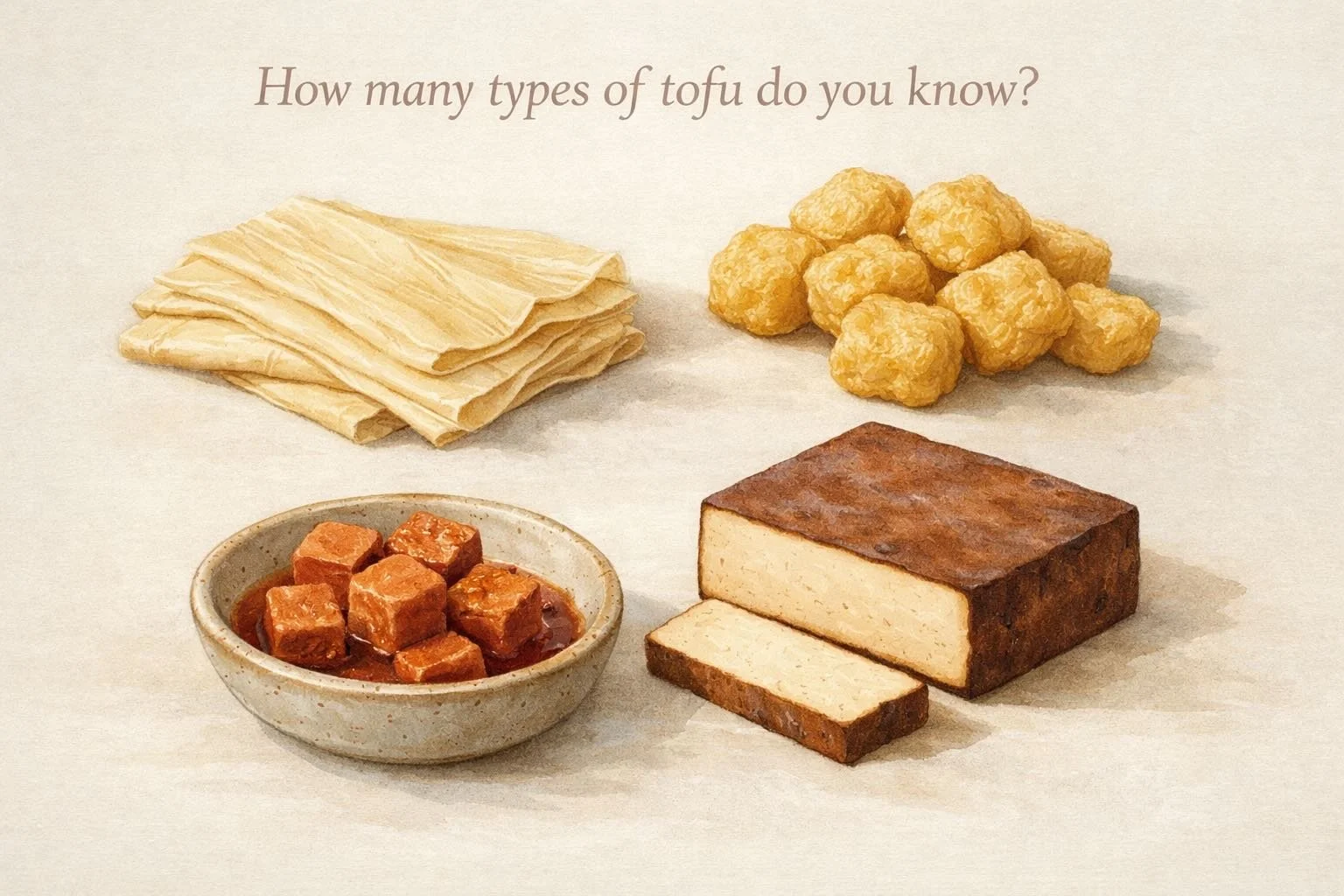
Tofu often gets framed as a single ingredient with a texture problem to solve. But historically, tofu was never just one thing. Across China, Japan, Korea, Vietnam, and beyond, tofu evolved into multiple forms, each designed to solve a different culinary need.
Some were created to preserve soy protein without refrigeration.
Some to absorb flavour more aggressively.
Some to replace meat, others to disappear into sauces.
Many of these forms still exist — but outside their original contexts, they’re often misunderstood, ignored, or mistaken for “weird tofu”.
This guide revisits those forgotten forms, explains why they exist, and shows how to use them properly.
1. Tofu Skin (Yuba) – Soymilk’s First Transformation
What it is
Yuba forms naturally on the surface of hot soymilk as proteins and lipids bond at the air–liquid interface. Instead of being pressed into blocks, this protein film is lifted, dried, or folded.
Texture & behaviour
Fresh yuba: soft, custard-like, delicate
Dried yuba: chewy, layered, almost meaty when rehydrated
How to use it
Slice fresh yuba into salads or light broths
Rehydrate dried yuba for stir-fries, braises, or hotpot
Treat folded yuba as a wrapper for fillings (vegetables, mushrooms, tofu mince)
Why it matters
Yuba isn’t tofu’s by-product — it’s tofu’s first expression. It shows that soy protein doesn’t need pressing to be useful or satisfying.
2. Tofu Puffs – Engineered for Absorption
What they are
Tofu puffs are made by deep-frying small cubes of firm tofu. The sudden heat causes water to flash-evaporate, inflating the protein structure into a hollow sponge.
Texture & behaviour
Light, airy interior
Minimal surface browning
Extremely high sauce absorption
How to use them
Simmer in curries or coconut gravies
Add to laksa, pho, or noodle soups
Stuff with vegetables or minced tofu for braised dishes
Common mistake
Treating tofu puffs as a crispy food. Their value isn’t crunch — it’s liquid uptake.
3. Smoked Tofu – Preservation Turned Flavour
What it is
Smoked tofu is firm or extra-firm tofu that’s been dehydrated and cold- or hot-smoked. This process reduces moisture while layering in aromatic compounds.
Texture & behaviour
Dense, sliceable
Low water content
Naturally savoury without seasoning
How to use it
Slice thin for sandwiches or wraps
Dice into salads or grain bowls
Pan-sear briefly — it browns quickly due to low moisture
Why it works
Smoked tofu solves one of tofu’s biggest challenges: flavour development without marinades. Smoke does the work upfront.
4. Fermented Tofu – Umami Concentrate
What it is
Fermented tofu (often sold in jars) is made by inoculating tofu cubes with moulds and bacteria, then ageing them in brine, rice wine, or spices.
Texture & behaviour
Soft, spreadable
Extremely salty and aromatic
Used in tiny amounts
How to use it
Mash into sauces or dressings
Add a small cube to stir-fries as a seasoning
Blend into marinades or chilli pastes
Think of it as
Not tofu to eat — tofu to season with. More like miso or anchovy paste than a protein.
5. Frozen Tofu – Accidental Innovation
What it is
Freezing tofu creates ice crystals that rupture the protein network. When thawed, the tofu becomes porous and fibrous.
Texture & behaviour
Spongy, chewy
Holds shape under long cooking
Absorbs sauces aggressively
How to use it
Braise in soy-based sauces
Use in stews or hotpots
Shred or tear for “pulled” textures
Why it matters
Frozen tofu demonstrates that texture isn’t fixed at manufacture — it can be engineered at home.
6. Okara-Based Tofu – Whole-Bean Thinking
What it is
Okara tofu incorporates soy pulp (leftover from soymilk production) back into the curd, increasing fibre and density.
Texture & behaviour
Slightly grainy
Heavier mouthfeel
Less delicate than standard tofu
How to use it
Pan-fry or grill
Crumble for patties or fillings
Use where structure matters more than smoothness
Why it’s overlooked
Modern tofu production prioritises smoothness. Okara tofu prioritises whole-bean efficiency.
Why These Forms Matter
When tofu is treated as a single product, it’s easy to call it bland or boring. But these forgotten forms reveal something else:
Tofu isn’t one ingredient — it’s a family of structures, each designed to behave differently with heat, water, fat, and time.
Understanding these forms means:
Less reliance on heavy marinades
Better texture without tricks
More variety without imitation meats
Final Takeaway
Tofu doesn’t need fixing.
It needs remembering.
Across cultures, tofu evolved not to mimic meat, but to solve cooking problems with elegance and efficiency. When we rediscover its forgotten forms, tofu stops being a compromise — and starts becoming a choice.
One ingredient. Many expressions.
That’s the real versatility of tofu. 🌱
