
The Tofu Pairing Cheat Sheet: Flavour in 3 Simple Steps
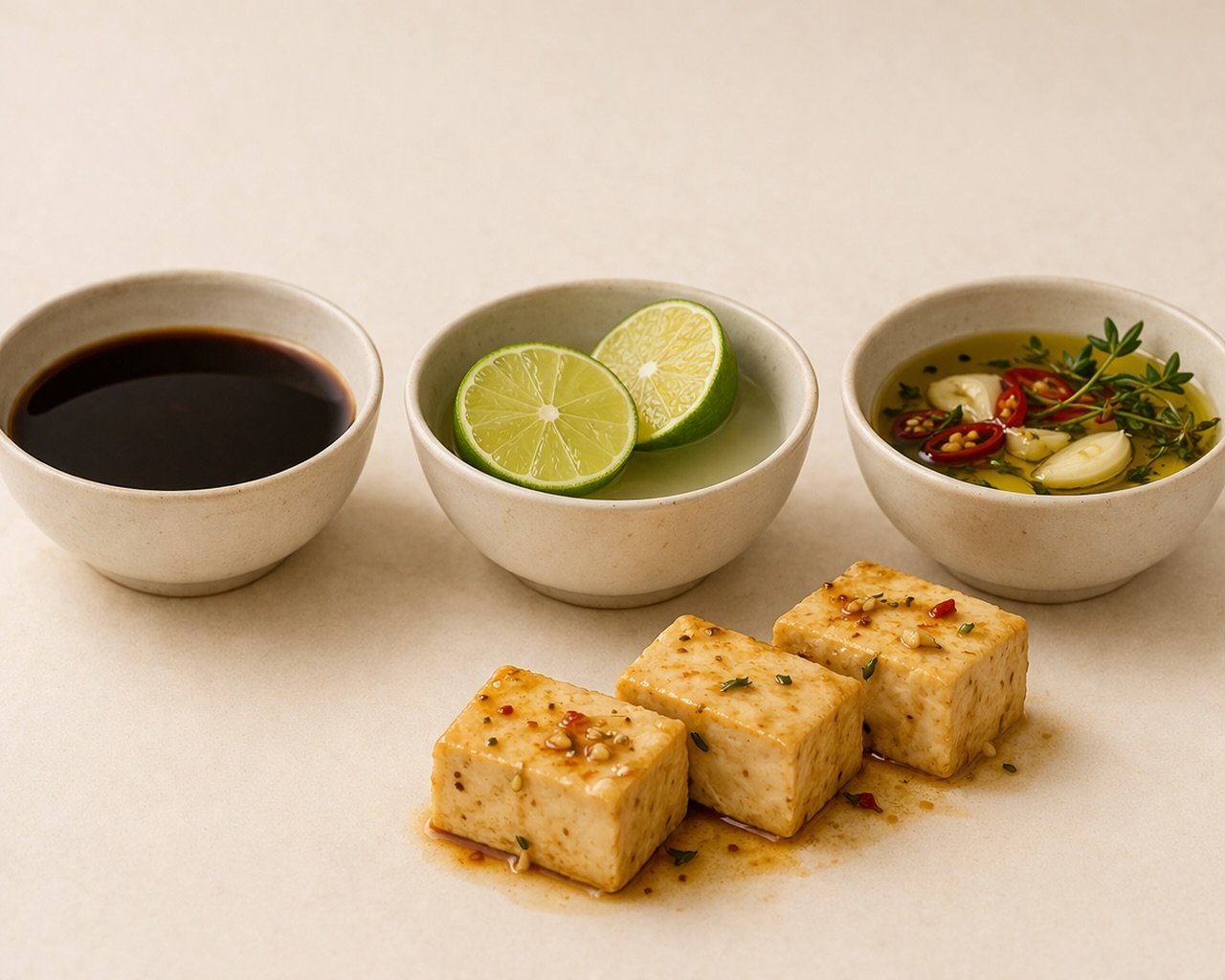
Why This Guide Exists
In the 50 Tofu Pairings guide, we explored how tofu works across different cuisines.
Different ingredients.
Different cultures.
Different expressions.
But underneath all that variety, the strongest pairings shared the same basic structure.
They were not built by chance.
They had depth.
They had brightness.
They had something to carry and define the flavour.
This guide turns that pattern into a simple way of thinking, so you can build better tofu dishes without always needing a recipe.
Because once you understand how flavour works, the question changes.
You stop asking:
“What marinade should I use?”
And start asking:
“What does this tofu need?”
The Tofu Pairing Cheat Sheet: Flavour in 3 Simple Steps
Most tofu pairings can be built in three simple moves:
Start with depth
Add brightness
Carry and define the flavour
That is the basic structure.
Simple enough for beginners.
Flexible enough for experienced cooks.
Step 1 — Start with Depth
Depth is the foundation.
It gives tofu savouriness, body, and satisfaction. Without it, tofu can taste light, thin, or unfinished.
Good depth ingredients include:
Soy sauce
Miso
Tomato paste
Curry paste
Tahini
Peanut butter
Yoghurt
These ingredients do not all work in exactly the same way.
Soy sauce brings saltiness and umami.
Miso brings saltiness, umami, and gentle sweetness.
Tahini brings richness and slight bitterness.
Yoghurt brings creaminess and tang.
So remember: one ingredient can play more than one role.
But in a pairing, it usually has one main job.
Here, the main role is to provide depth.
Step 2 — Add Brightness
Brightness wakes the flavour up.
It stops rich ingredients from feeling heavy and helps the whole dish taste more alive.
Good brightness ingredients include:
Lemon
Lime
Vinegar
Tamarind
Pickled brine
Sumac
Too little brightness, and tofu can taste flat.
Too much, and the flavour can become sharp.
The goal is not to make the dish sour.
The goal is to create lift.
Step 3 — Carry and Define
This step finishes the pairing.
It has two parts.
Carry
Fat helps flavour spread, soften, and linger.
Good carrying ingredients include:
Olive oil
Sesame oil
Chilli oil
Coconut milk
Mustard oil
For the clearest flavour, let salty or acidic ingredients touch the tofu first, then add oil just before cooking or whisk it in well.
This helps the seasoning reach the tofu surface before the oil becomes part of the finish.
Define
Aromatics give the pairing its identity.
Good defining ingredients include:
Garlic
Ginger
Chilli
Herbs
Spices
Spring onion
Roasted garlic
This is where a pairing starts to feel East Asian, Mediterranean, Southeast Asian, Middle Eastern, smoky, fresh, or warming.
Depth gives weight.
Brightness gives lift.
Carry and aromatics give personality.
The Quiet Fourth Element: Seasoning
Even though this guide uses three main steps, seasoning still matters.
Many depth-building ingredients also contribute saltiness.
Soy sauce, miso, curry paste, pickled brine, and some condiments season the tofu while adding flavour.
But if your tofu still tastes bland, the answer may not be more garlic, more herbs, or more sauce.
It may simply need better seasoning.
A small pinch of salt, a splash of soy sauce, or a little more miso can make the whole pairing come together.
What About Sweetness?
Sweetness is not always needed, but it can be very useful.
A little sweetness can soften sharp acidity, round out saltiness, and make savoury flavours feel fuller.
You might use:
Maple syrup
Sugar
Date syrup
Sweet chilli sauce
Roasted onion
This is why many classic sauces work so well.
Teriyaki balances salty and sweet.
Peanut sauce often balances savoury, sweet, sour, and spicy.
Tomato-based sauces often benefit from a small amount of sweetness to balance acidity.
The goal is not always to make tofu taste sweet.
The goal is balance.
A Complete Pairing, Built Simply
Here is a simple example:
Soy sauce
Rice vinegar
Sesame oil
Garlic
Nothing complicated.
But every role is there.
Soy sauce gives depth and seasoning.
Rice vinegar gives brightness.
Sesame oil carries flavour.
Garlic defines the aroma.
That is why it works.
Not because it has many ingredients.
Because each ingredient has a purpose.
Why This Works for Tofu
Fresh tofu does not absorb flavour deeply like a sponge.
Most flavour stays near the surface.
That means tofu usually benefits more from balance and good contact than from very long marinating.
In simple terms:
Balance matters more than quantity.
Contact matters more than soaking.
Cooking matters more than waiting.
Different tofu types also behave differently.
Firm or extra-firm tofu can be pressed to remove surface moisture.
Firm or extra-firm tofu also freezes particularly well, developing a chewier, more porous texture after thawing.
Silken tofu is delicate and is usually better with sauces poured over it, not heavy marinades.
Once you understand the tofu type, the pairing becomes easier.
Cooking Method Changes the Pairing
A marinade or sauce creates flavour potential.
Cooking decides how that flavour develops.
The same pairing can taste different depending on the method.
Pan-frying gives browning and savoury edges.
Baking concentrates flavour as moisture evaporates.
Grilling adds char and smokiness.
Braising keeps tofu juicy and lets the sauce coat every surface.
For crisp tofu, keep the surface relatively dry before cooking, then add sauce near the end.
For saucy tofu, let the tofu simmer gently in the sauce so the outside can take on flavour.
The pairing is the structure.
The cooking method is the expression.
A Simple Flavour Troubleshooting Guide
If the tofu tastes:
Flat — add brightness.
Bland — add seasoning.
Heavy — add acid or fresh herbs.
Too sharp — add fat or a little sweetness.
Confusing — use fewer ingredients.
Small adjustments often work better than adding more ingredients.
Good flavour is not about adding everything.
It is about knowing what is missing.
Example Pairings
East Asian
Soy sauce
Rice vinegar
Sesame oil
Ginger
Savoury, bright, nutty, and aromatic.
Mediterranean
Lemon
Olive oil
Garlic
Oregano
Fresh, fragrant, and simple.
Southeast Asian
Lime
Coconut milk
Chilli
Fresh herbs
Bright, rich, spicy, and lively.
Middle Eastern
Tahini
Sumac
Garlic
Parsley
Nutty, tangy, aromatic, and fresh.
Smoky & Roasted
Smoked paprika
Lemon
Olive oil
Roasted garlic
Deep, bright, rich, and mellow.
Different ingredients.
Same basic structure.
That is the point of the cheat sheet.
Common Mistakes to Avoid
Adding Ingredients Without Purpose
More ingredients do not always create better flavour.
A simple, balanced pairing is often stronger than a crowded one.
Forgetting Brightness
Rich ingredients like peanut butter, tahini, miso, and coconut milk usually need lift.
A little lemon, lime, vinegar, tamarind, or sumac can make them feel lighter and more complete.
Adding Oil Too Early Without Thinking
Oil is useful, but it works best when it has a purpose.
Use it to carry aroma, help browning, or finish the dish.
Do not rely on it to fix an unbalanced marinade.
Relying Only on Time
Long marinating will not fix a poor pairing.
If the flavour is flat, bland, sharp, or heavy, adjust the balance first.
Where This Leads Next
Once this becomes intuitive, cooking changes.
You stop asking:
“What marinade should I use?”
And start asking:
“What role is missing?”
Maybe the tofu needs depth.
Maybe it needs brightness.
Maybe it needs fat.
Maybe it needs herbs, spices, or better seasoning.
That is when tofu becomes flexible.
Not because you memorised more recipes.
Because you understand how flavour works.
Final Takeaway 🌱
Tofu does not need complexity.
It needs clarity.
Start with depth.
Add brightness.
Carry and define the flavour.
Then season, taste, and adjust.
Once you see this pattern, you will notice it everywhere — not just in tofu, but in how great flavour is built across cuisines around the world.
