
How to Cut Tofu for Flavour, Texture, and Better Browning
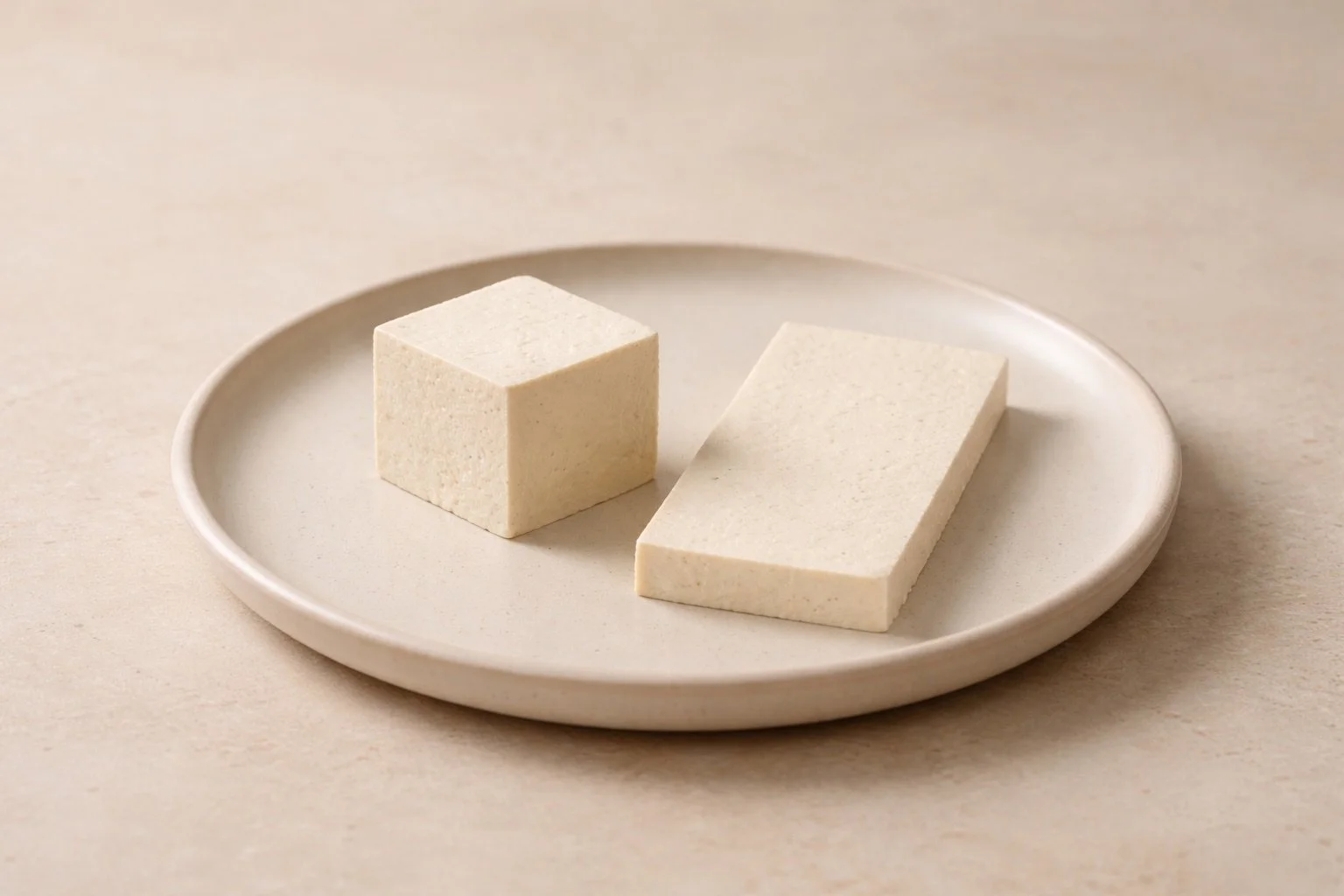
Cutting tofu is often treated as a small step.
But it quietly determines how tofu will behave once it hits the pan.
Before seasoning, before heat, the shape has already set the direction.
The Tofu World Method
Function → Structure → Cut
• Start with the role you want (crisp, soft, flavour carrier)
• Choose the structure that supports it (surface, thickness, texture)
• Then make the cut
This simple sequence turns cutting from a habit into a decision.
What Cutting Actually Changes
When you cut tofu, you reshape how it cooks.
Each cut changes three things:
• Surface area – how much tofu is exposed to heat
• Moisture movement – how quickly water can escape
• Structure – how well it holds together
These three forces control everything that follows:
• whether tofu browns or steams
• whether it turns crisp or stays soft
• whether flavour clings or slips away
Cutting is not about shape—it is about controlling how water, heat, and flavour interact.
Surface Area: Where Browning Begins
Browning happens at the surface.
But as long as moisture is present, the surface temperature stays low, and tofu cannot develop a proper crust.
Increasing surface area helps:
• moisture evaporates faster
• heat builds more efficiently
• browning begins sooner
In practice:
• Smaller or thinner pieces → brown faster
• Larger pieces → take longer to colour
But more surface is not always better.
Too much exposure can dry the tofu before a good crust forms.
The goal is not maximum surface—it is controlled exposure.
Choosing the Role
1. Crisp Element → Increase Exposure
If tofu is meant to add texture and contrast:
• cut smaller or thinner
• create more edges
• allow faster moisture loss
Result:
Crisp edges, light interior, clear structure
2. Soft Centre → Protect the Interior
If tofu is meant to feel gentle and integrated:
• cut larger pieces
• reduce the number of cuts
• retain internal moisture
Result:
Soft, tender texture with subtle contrast
3. Flavour Carrier → Shape the Surface
Flavour does not move deeply into tofu.
It stays mostly at the surface.
So instead of relying on soaking, focus on:
• creating more surface contact
• using shapes that hold sauce
• allowing coatings to cling
Result:
Tofu that feels more seasoned, not just coated
The Overlooked Step: After You Cut
Freshly cut tofu surfaces are wet.
If you cook immediately:
• moisture must evaporate first
• temperature stays low
• browning is delayed
This is why tofu often:
• sticks to the pan
• steams instead of sears
• remains pale
A small adjustment makes a big difference:
• let it sit briefly
• or gently pat it dry
This allows the surface to dry slightly, so heat can build, and browning can begin.
A Simple Way to Decide
Instead of memorising shapes, think in outcomes:
• Want crisp edges? → increase surface (smaller cubes, thin slices)
• Want softness? → reduce exposure (larger blocks, thick slabs)
• Want stronger flavour? → shape the surface for better contact (rough cuts, scored pieces)
Cutting becomes a way of steering the result, not just preparing the ingredient.
Final Takeaway 🌱
Better tofu doesn’t start in the pan.
It starts with the cut.
Because the way you cut tofu decides:
• how water leaves
• how heat builds
• how flavour stays
And once you understand that, you stop cutting tofu out of habit—and start cutting it with purpose.
