
What Tofu Sounds Like When It Cooks (And Why It Matters)
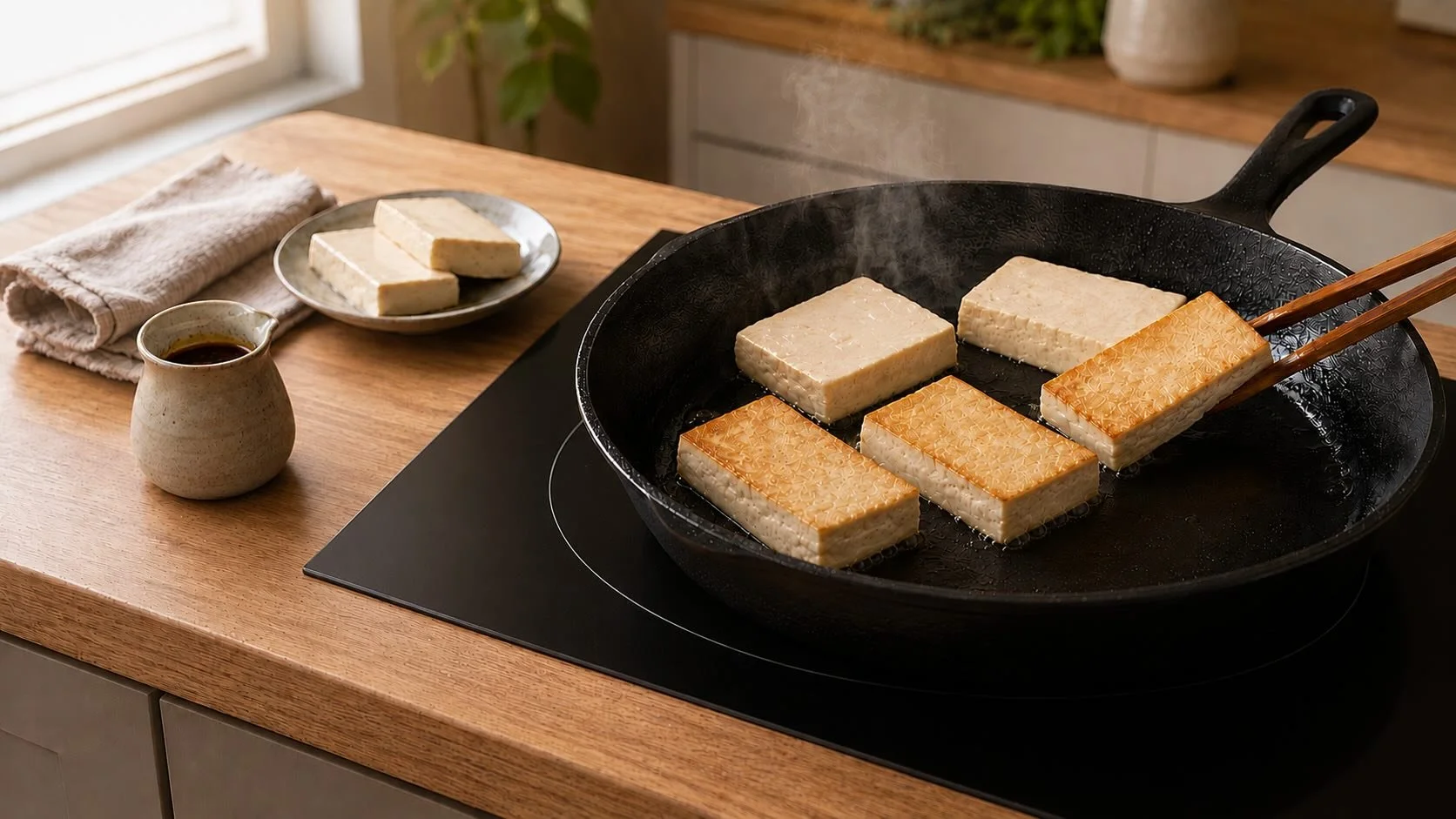
We often learn to cook tofu by sight: watch for golden edges, bubbling sauce or a crisp-looking crust. Yet the pan usually gives us another clue before any of these changes become obvious.
Sound can reveal whether the pan has recovered its heat, whether moisture is evaporating steadily, whether wet marinade is hitting hot oil or a sauce is beginning to reduce. It cannot tell you everything on its own, but it can tell you when to look more closely.
Cooking tofu by sound is not merely poetic. It is practical.
First, Know What You Are Hearing
Most of the sound produced during pan-frying comes from water turning to vapour around hot tofu and oil. Firm tofu naturally contains plenty of water, and it does not need to be dry all the way through. What matters most for browning is managing moisture at the surface.
As the contact face dries, its temperature can rise, and browning becomes easier. The sound often softens during this process—but quieter does not automatically mean the tofu is ready.
The reliable approach is simple:
Listen first, then confirm with colour, aroma, contact and release.
The First Sizzle: Testing the Pan
For bare, surface-dried firm tofu in a lightly oiled pan, the first piece can act as a test.
It should produce a prompt, active sizzle without violent spitting or clouds of smoke. If it remains almost silent, the pan may not be hot enough, the tofu may have poor contact with the surface, or the pan may have cooled sharply.
If it erupts into aggressive popping, surface water or wet marinade may be meeting oil that is too hot.
Try this simple calibration:
Heat a lightly oiled pan over medium-high heat.
Pat one tofu piece dry and place it carefully in the pan.
Listen for an immediate but controlled sizzle.
Adjust the heat if necessary before adding the remaining pieces.
Leave space between them so the pan can recover and vapour can escape.
Stoves and pans behave differently, so this small test is more dependable than following one heat setting blindly.
A Steady Sizzle: Active Evaporation
A consistent sizzle usually means heat is moving into the tofu and surface moisture is evaporating. Browning may be beginning, but the sound alone does not prove that a crust has formed.
Look for several supporting signs:
A thin golden line appearing around the bottom edge
A warm, toasted aroma
A surface that releases more easily from the pan
Even contact between the tofu and cookware
At this stage, patience matters. Constantly lifting or turning the tofu interrupts contact and can tear a crust before it has strengthened.
Pressing is not always necessary. Some water-packed firm tofu benefits from gentle pressing, while dense, vacuum-packed or high-protein tofu may need only draining and thorough surface drying. Excessive pressing can make certain tofu unnecessarily firm.
Sharp Popping: Check for Surface Water
Sudden, irregular pops usually indicate that water has reached hot oil. The source may be:
A wet tofu surface
Marinade clinging to the pieces
Condensation on refrigerated tofu
Water on a utensil
Liquid released by another ingredient
Some crackling is normal during frying. Forceful spluttering accompanied by flying oil droplets is different and requires caution.
Do not lean over the pan or add water. Step back, reduce the heat and use long utensils. If necessary, move the pan away from the heat—but only if you can do so safely.
To reduce splattering, pat tofu dry immediately before frying. If it has been marinated, let excess liquid drain away. A sugary marinade is often better added later because its sugars can scorch before the tofu browns.
When the Pan Becomes Quieter
Silence does not have one fixed meaning.
A pan may become quieter because the contact surface has dried and a crust is forming. It may also become quiet because the pan lost heat, the tofu is not sitting flat, or the food is beginning to scorch after much of its surface moisture has disappeared.
Use the accompanying clues:
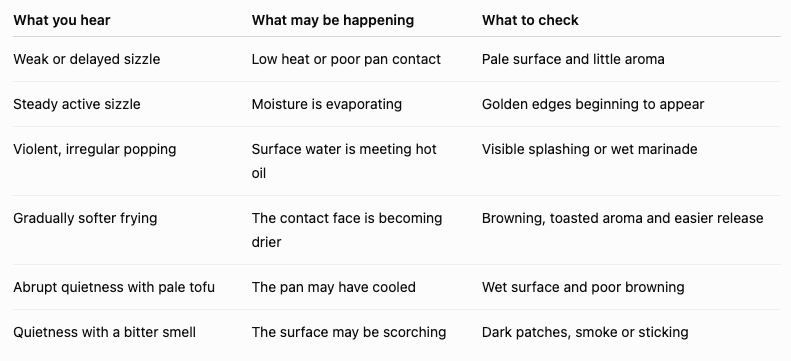
Do not turn tofu merely because the pan becomes quiet. Gently test one piece. If it releases without force and the underside is evenly golden, it is probably ready. If it clings firmly but does not smell burnt, give the crust more time to form.
The Normal Sound Progression
For uncoated firm tofu, pan-frying often follows this pattern:
The tofu produces an immediate sizzle as it enters the hot pan.
The sound may intensify briefly as surface moisture evaporates.
It settles into a steadier hiss after the pan recovers its temperature.
The sound gradually softens as the contact face dries.
Golden edges, toasted aroma and easier release confirm when to turn.
The pattern begins again on the second side.
A large batch can interrupt this progression by cooling the pan. If the sound fades across the entire pan immediately after adding the tofu, cook fewer pieces at a time rather than simply forcing the heat higher.
Different Tofu Produces Different Sounds
The acoustic pattern changes with the ingredient and method.
Cornflour-coated tofu may develop a dry, crisp-sounding crackle as its coating sets. Frozen-and-thawed tofu can release more liquid and may sound more active at first. Soft or silken tofu requires gentler handling and should not be judged by the same browning cues as extra-firm tofu.
Cookware matters too. Heavy cast iron retains heat well but responds slowly to adjustments. Thin stainless steel can heat and cool quickly. Non-stick cookware generally calls for more moderate temperatures and attention to its manufacturer’s heat guidance.
Sound is therefore not a universal timer. It is feedback specific to the tofu, pan and heat source in front of you.
Listen When the Sauce Goes In
The pan’s language changes again when liquid is added.
A thin sauce usually produces quick, watery bubbling. As water evaporates, the bubbles often become slower, thicker and glossier. The sound may change from a lively hiss to a softer, heavier bubbling.
This can help you recognise when a sauce is concentrating—but continue watching it. Sauces containing sugar, maple syrup, miso or starch can move quickly from glossy to sticky and burnt.
For well-browned tofu, it is often best to establish the crust first, lower the heat slightly and then add the sauce. Toss or turn the pieces until coated, removing the pan from the heat before the glaze becomes excessively thick.
Final Takeaway
Tofu does not provide a perfect diagnosis through sound, but it gives useful early warnings.
A steady sizzle suggests active evaporation. Sharp popping tells you to check for surface water. A quieter pan may signal a drying crust, lost heat, poor contact or impending scorching.
The sound tells you when to check. Colour, aroma and easy release tell you what to do next.
The more closely you listen—and the better you connect sound with your other senses—the more confidently you can cook tofu with a golden exterior and the texture you intended.
