
Stinky Tofu: Fermentation, Culture and Culinary Power
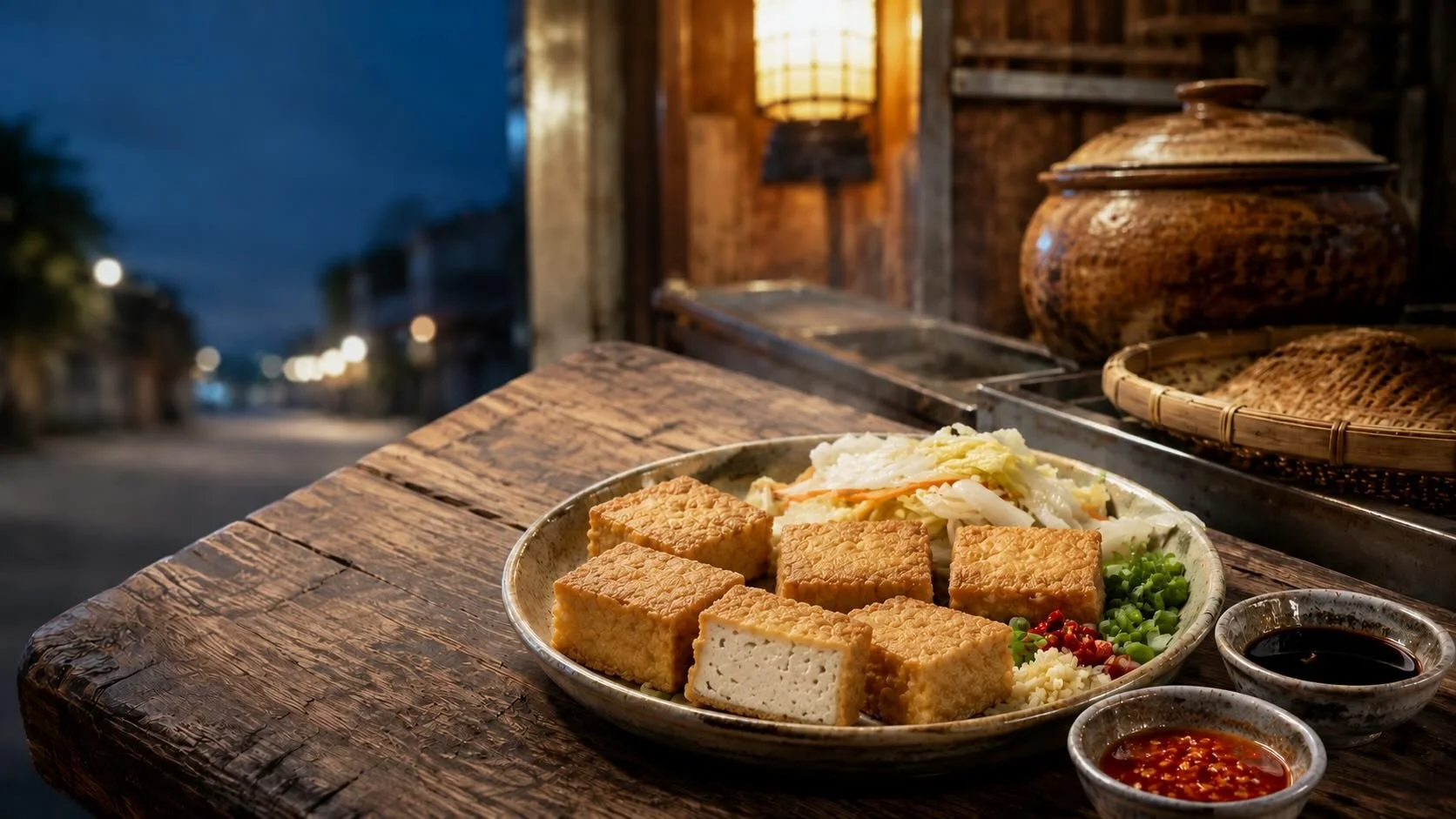
Stinky tofu announces itself. Its aroma can suggest aged cheese, earth, sulphur or fermented pickle. Yet behind the smell is one of tofu’s most expressive forms: food shaped by fermentation, regional craft, street culture and skilled cooking.
Stinky tofu is not rotten tofu. Properly made versions are fermented under controlled conditions. Their powerful aroma is part of the food’s identity, not evidence of spoilage.
What Exactly Is Stinky Tofu?
Stinky tofu is tofu transformed through contact with fermented brine or, in some traditions, longer direct fermentation. It describes a family rather than one standard product. Texture, colour, intensity and cooking vary by region and producer.
In the familiar street-food style, firm tofu is soaked in mature fermented brine containing vegetables, bamboo shoots, herbs, grains, soy products or other local ingredients. Microbial activity produces aromatic compounds that the tofu absorbs, creating its characteristic smell and savoury complexity.
Recipes and microbial communities differ, and responsible producers control time, temperature, salinity and sanitation. Fermentation is therefore not simply leaving tofu to age. It is a managed biological process.
How Fermentation Changes Tofu
Fresh tofu is mild because its hydrated protein gel contains few forceful aromas. During fermentation, microorganisms and their enzymes transform proteins, carbohydrates and other materials. Depending on the brine, indoles, sulphur compounds, phenols and short-chain acids can contribute pungent, earthy, smoky, sulphurous or cheese-like notes.
Texture depends on the process. Short brining may leave the interior pale, cohesive and tender; longer fermentation can soften it and deepen flavour. Some fermented tofu becomes creamy, but this does not characterise every form.
Cooking causes another transformation. Frying drives surface moisture away, forming a thin golden crust while the centre remains moist. Heat creates roasted aromas that balance fermentation’s pungency. The contrast—crisp outside, tender within—is central.
One Food, Many Traditions
Stinky tofu is especially associated with China, Taiwan and Hong Kong, but it does not taste the same everywhere.
Taiwanese night-market versions are commonly fried until golden and served with pickled cabbage, chilli sauce and garlic. The pickle’s acidity and crunch cut through the richness, while chilli extends rather than hides the fermented flavour.
Changsha-style stinky tofu from Hunan is famous for its dark exterior. Regional soaking brines deposit the colour; it is not burnt, and exact formulations vary among makers. Fried pieces are dressed with chilli, garlic, coriander and savoury sauce, becoming crisp, juicy, hot and aromatic.
In Shaoxing and parts of Zhejiang, chou doufu expresses another fermented character and may be fried, steamed or used in local dishes. Hong Kong stalls traditionally offer deeply fried pieces with pungent sauces. Makers maintain distinctive brines, so variations exist within one city.
This diversity matters. Asking which version is “authentic” is less useful than asking where it comes from, how it was fermented and how local people eat it.
How It Is Cooked and Served
Frying is famous, but not universal. Stinky tofu may be steamed for a softer, more direct expression of fermentation; braised with chilli, mushrooms or vegetables; grilled; or simmered in spicy hotpot. Each technique changes the balance between aroma, texture and seasoning.
Accompaniments work through contrast and connection. Pickles provide acidity; chilli adds warmth; garlic and spring onion reinforce savouriness. Soy-based sauces contribute salt and umami, while sweetness rounds harsh edges. The goal is to structure the tofu’s intensity, not bury it.
For a first taste, choose a reputable busy stall or restaurant and order it freshly fried with pickled vegetables. Eat it hot. The smell may dominate initially, but the flavour is often milder: savoury and gently creamy beneath the crust.
Two Different Fermentation Paths
Not everything called stinky tofu follows the same process. In the familiar street-food style, the brine undergoes long fermentation. Fresh tofu is soaked in that mature brine, taking on aroma and flavour while retaining a cohesive structure suitable for frying, steaming or braising. The tofu may not be directly aged, but its defining brine is fermented.
Other products undergo longer direct fermentation. Grey or stinky sufu is commonly mould-ripened, salted and aged in dressing brine until enzymes break down much of its protein structure. It becomes soft, creamy and concentrated, generally eaten as a condiment rather than a fried snack. Both belong to the fermented-tofu family, but they are not interchangeable.
Nutrition and Perspective
Stinky tofu retains tofu’s protein and may provide calcium, depending on its coagulant. Exact values vary with the tofu, brine and serving method. Fermentation can alter flavour compounds and digestibility, but it does not turn the food into a nutritional miracle.
Preparation matters. Deep-frying increases energy and fat, while salty brines and sauces may raise sodium considerably. Served with vegetables, rice or soup, stinky tofu can belong to a balanced meal. People limiting sodium should check labels or ask how it is prepared.
Why Stinky Tofu Matters
Stinky tofu demonstrates that tofu is not merely a neutral substitute waiting to imitate meat. It can carry terroir, microbial craft, memory and civic identity. A brine maintained across time becomes a living connection between makers and place; a night-market serving becomes part of a city’s soundscape and rhythm.
Its aroma also asks something of the eater: curiosity before judgement. Foods considered difficult from outside a culture may be treasured within it because flavour is inseparable from childhood, community and occasion. Respectful tasting does not require instant affection. It requires recognising that unfamiliarity is not inferiority.
That tension gives the dish enduring culinary power.
Final Takeaway
Stinky tofu is a controlled transformation made edible: mild tofu becomes pungent, layered and culturally specific through fermentation, then gains new character through frying, steaming or braising. Begin with a well-made regional version, taste it hot and notice the relationship between crust, centre, pickle, sauce and aroma.
You may love it immediately, or need several encounters. Either response is honest. What matters is approaching it as more than a dare. Stinky tofu reveals tofu’s extraordinary range—and reminds us that some of the world’s most meaningful foods begin by challenging our expectations.
