
Tofu Burnout? Here’s How to Fall in Love with It Again
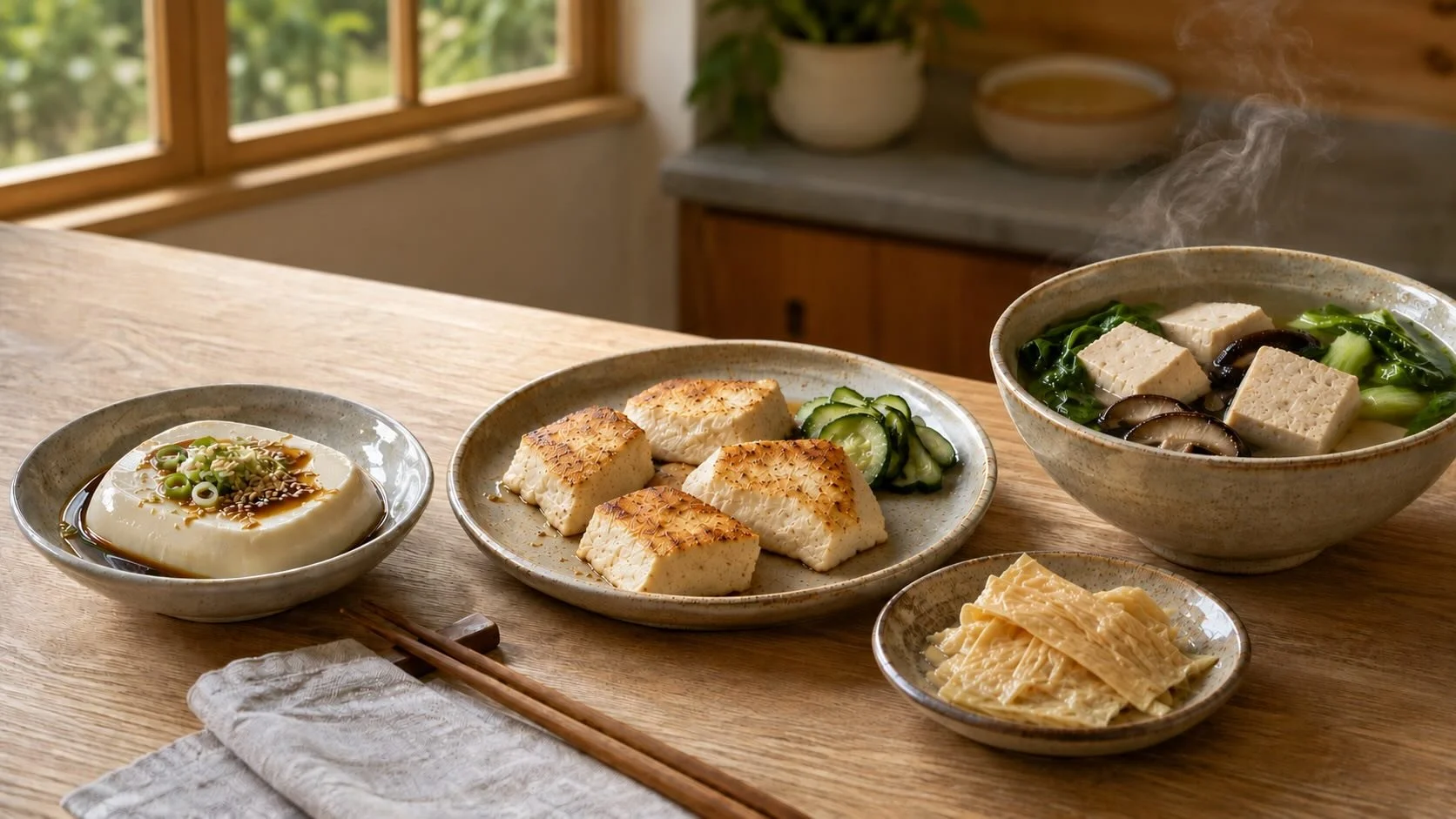
Even devoted tofu lovers can reach a point when another marinated, air-fried cube no longer feels exciting.
Often, tofu itself is not the problem. The routine around it is: the same firmness, cut, cooking method and sauce profile repeated each week. A different marinade may change the flavour, but the meal can still feel familiar if the tofu’s texture and role remain unchanged.
The answer is not necessarily a more complicated recipe. First, identify which part of the experience needs changing.
Diagnose Your Tofu Rut
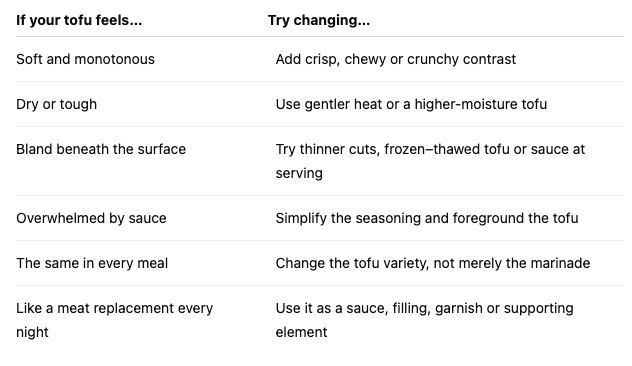
Experienced cooks often develop dishes by adjusting a few sensory variables: texture, temperature, acidity, aroma and richness. Home cooks can do the same. One deliberate change may be enough to make tofu interesting again.
1. Change the Tofu Itself
Before asking, “How should I flavour this tofu?”, ask whether it is the right tofu for the experience you want.
Silken tofu has a delicate, custard-like texture. Serve it chilled or warm it gently in broth, handling it as little as possible. Pairing its softness with toasted seeds, crisp shallots or chilli crunch creates an immediate contrast.
Frozen–thawed tofu offers a different experience. Freezing forms ice crystals that disrupt the tofu’s protein network. After thawing and gentle squeezing, medium or firm tofu becomes more porous, springy and absorbent—ideal for hotpots, broths and braises. This is not automatically an improvement: freezing trades fresh tofu’s smoothness for greater chew and liquid absorption.
Yuba, or tofu skin, has a layered, slightly chewy texture unlike block tofu. Depending on the product, it can be rehydrated, simmered, folded through a stir-fry or lightly crisped. Follow the packet directions because fresh, frozen and dried yuba require different preparation.
Smoked tofu is generally firm, sliceable and strongly flavoured enough for sandwiches, grain bowls or quick pan-browning. Taste it before adding salty seasonings.
Fermented tofu, such as Chinese preserved bean curd, performs a different role. It is usually a concentrated, salty condiment rather than the main tofu component. Mash a small amount into sauces, marinades or braises, then adjust to taste.
Pressing also depends on the product and intended result. Silken tofu should not be pressed, while water-packed firm tofu may need draining, drying or brief pressing. Vacuum-packed super-firm or high-protein tofu usually contains little removable water, so drying it is generally sufficient. Always follow the package instructions.
2. Give Tofu a Different Job
Tofu fatigue can develop when every block is expected to become the protein at the centre of the plate. Letting it play a supporting role creates new possibilities.
Try blending tofu into a creamy dressing or pasta sauce; crumbling it into dumplings or savoury fillings; scattering crisp pieces over soup; warming it in a clear mushroom broth; or serving chilled tofu beside spicy noodles and roasted vegetables.
Changing tofu’s function can transform a meal more profoundly than changing its seasoning.
3. Build Contrast Deliberately
A satisfying tofu dish often depends on what surrounds the tofu:
crisp tofu with juicy cucumber or tomatoes
silken tofu with toasted nuts or crisp shallots
porous frozen tofu with a clear aromatic broth
creamy tofu sauce with charred vegetables
warm tofu with a cool, sharp pickle
rich glazed tofu with fresh herbs or citrus
Think in contrasts rather than long ingredient lists. If the tofu is rich, add acidity. If it is soft, add crunch. If it is deeply browned, introduce freshness. If the sauce is intense, include something plain that gives the palate space.
4. Try Four Tofu Resets
Tamarind and chilli tofu
Dry 300 g firm tofu and pan-sear it until golden. For a crisper shell, dust it very lightly with cornflour before frying; leave it uncoated for a cleaner tofu texture.
Combine one to two teaspoons of strong tamarind concentrate—or one tablespoon of milder prepared tamarind purée—with one tablespoon water, one to two teaspoons chilli oil and a small amount of sugar. Toss briefly with the tofu. Aim for a sharp, light glaze rather than a heavy coating.
Warm silken tofu with black vinegar
Gently warm approximately 300 g silken tofu without boiling it. Mix two teaspoons Chinese black vinegar, one teaspoon soy sauce and one teaspoon sesame oil, then spoon the dressing over the tofu. Finish with sliced spring onion.
The appeal comes from the contrast between mild, warm tofu and the aromatic, acidic dressing—not from building a complicated sauce.
Smoky mustard baked tofu
Combine one tablespoon Dijon mustard, two teaspoons maple syrup, one teaspoon oil and half a teaspoon smoked paprika. Lightly coat torn extra-firm tofu and bake at 200°C until browned at the edges but still tender inside, turning once.
Remove it before the centre becomes dry or leathery. Crispness is most satisfying when some interior moisture remains.
Frozen tofu in mushroom broth
Freeze medium or firm tofu, thaw it completely and squeeze it gently. Tear it into large pieces and simmer them in mushroom broth until the porous centres have absorbed some liquid. Finish with ginger, spring onion or leafy greens rather than a heavy sauce.
Common Mistakes
Changing only the sauce: A new marinade cannot completely disguise the same cut and texture. Change the tofu variety, cooking method or role as well.
Pressing every tofu: Remove water only when it supports the intended result. Excessive pressing can make tofu unnecessarily dense and dry.
Combining too many bold flavours: Miso, chilli oil, sesame, citrus and fermented tofu can all be delicious, but using them together indiscriminately can blur the flavour.
Overcooking for crispness: Deeply dried tofu is not necessarily better tofu. Preserve moisture unless a deliberately chewy result is the goal.
When the Best Reset Is Simplicity
Tofu is often described as a blank canvas, but good tofu has its own subtle sweetness, bean aroma and clean finish.
Try tasting silken, medium and firm tofu side by side before seasoning them. Notice their moisture, density and flavour. A fresh tofu served chilled or gently warmed with a little soy sauce, salt or clean broth may feel more distinctive than another heavily glazed version.
Restraint is not a lack of creativity. Sometimes it is how we learn to appreciate the ingredient itself.
Final Takeaway
Tofu burnout does not mean you have exhausted tofu’s possibilities. It may simply mean that one part of your routine—its texture, role, temperature, technique or flavour balance—has stopped changing.
Begin with one small reset. Trade firm tofu for silken, a thick glaze for a clear broth, or softness for crunch. Alternatively, choose a good tofu and season it less.
Tofu may not need more effort—only a different role, a new contrast or a little more attention.
