
Make Tofu Taste Like Meat – Without Overprocessing
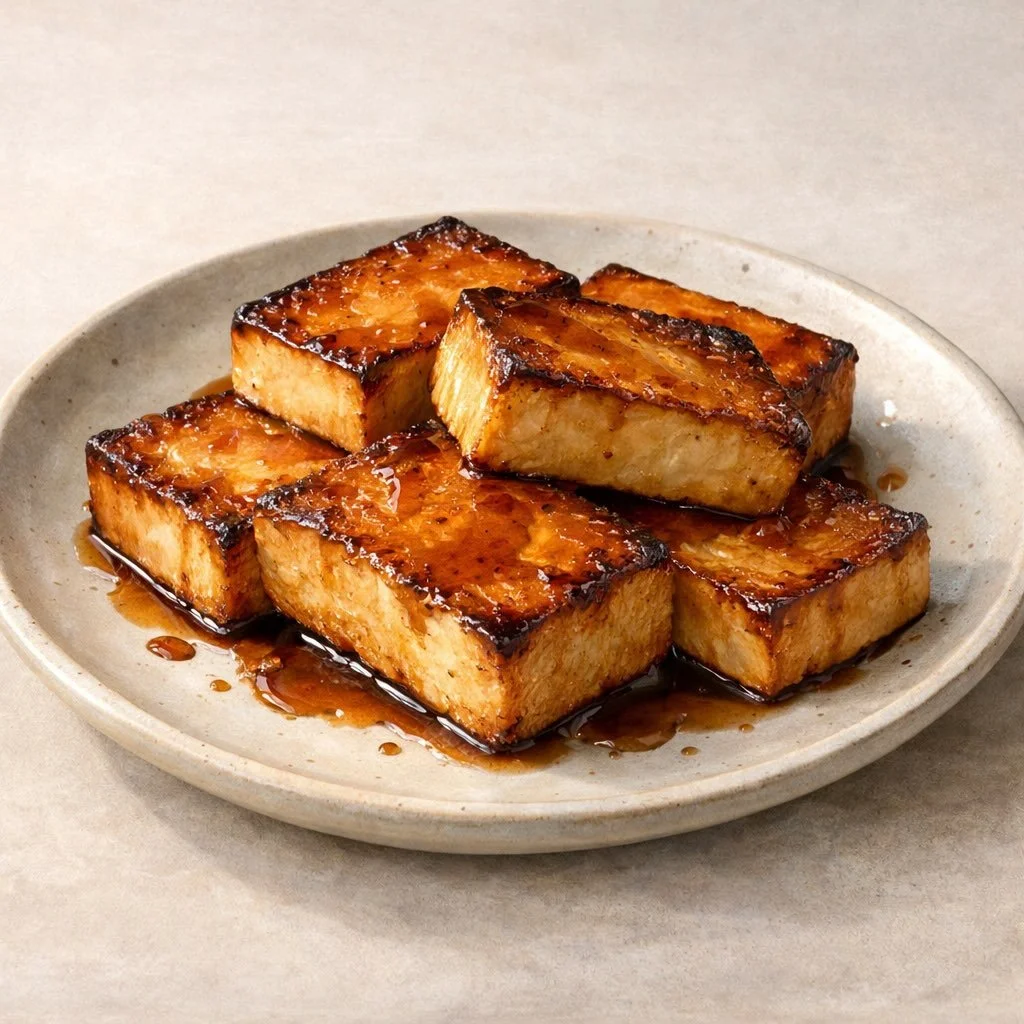
For years, “meaty” tofu has often been framed as a problem of imitation.
Make it taste like beef. Pull it like chicken. Process it until its fibres resemble muscle.
Those approaches can be useful, but tofu does not need to become meat to deliver a deeply savoury, substantial meal.
What it needs is structure, moisture control, browning, fat, umami and thoughtful seasoning.
When tofu tastes bland or feels unsatisfying, the problem is rarely that it has not been processed enough. More often, it has been cooked without enough attention to water, heat and surface development — or treated as though it should absorb flavour like a dry sponge.
To make tofu taste “meaty”, it helps to understand what actually creates that sensation.
Why More Processing Is Not Always the Answer
Some commercial meat alternatives use extrusion, binders and specialised flavour systems to recreate the fibres, aroma and colour of cooked meat. These products can be convenient and impressive, but they are not the only route to a satisfying plant-based meal.
Tofu is already a complete food: a network of coagulated soy proteins holding a large amount of water. Its texture can be changed through slicing, pressing, freezing, brining, drying and heating.
The goal is not to rebuild it into something else. It is to work with its existing structure and create the qualities often associated with meat: chew, browning, savoury depth, aroma, richness and contrast.
What Creates Meaty Satisfaction?
Meaty satisfaction does not come from flavour alone. It is created by several sensations working together.
Browning
A browned crust contributes roasted aromas and savoury complexity through the Maillard reaction.
For strong browning to occur, the tofu surface must become hot and relatively dry. If the surface is wet, much of the heat is first used to evaporate water, so the tofu steams before it browns.
Patting tofu dry, spacing the pieces apart and leaving them undisturbed long enough to form a crust are therefore more important than using extreme heat.
Density and Resistance
Meat usually offers some resistance when bitten. Tofu can create a similar sense of substance through firmness, shape and moisture loss.
Firm tofu often gives a tender but substantial centre, while extra-firm tofu creates more chew and is easier to handle. Thick slabs preserve interior moisture; thinner slices create more browned surface.
Freezing and thawing create a different texture. Ice crystals enlarge the internal spaces, leaving tofu more open, layered and chewy after thawing and squeezing. This is useful when you want a rugged texture that holds sauce, although fresh tofu is better when you want a smoother, more cohesive centre.
Moisture Contrast
Good tofu is not simply dry.
The most satisfying result often combines a browned exterior with a moist, tender middle. Pressing too aggressively or cooking for too long can make tofu leathery, while leaving too much surface water prevents browning.
The goal is controlled moisture, not complete dehydration.
Fat, Aroma and Umami
A small amount of oil contributes richness and carries aromatic compounds across the palate. It also helps spices, garlic, ginger and other seasonings express themselves more clearly.
Umami provides savoury depth. Useful sources include soy sauce, miso, mushrooms, kombu, fermented bean pastes, tomato paste and concentrated vegetable stock.
Combining more than one source often creates greater complexity than relying on a single seasoning.
Choose the Right Shape and Tofu
There is no single “meatiest” cut.
Thick slabs create chew and a juicy centre. Thin slices develop more crust. Cubes work well in curries, braises and glazed dishes because several sides can brown and hold sauce. Crumbled tofu develops irregular edges that crisp quickly and suits chilli, fillings and savoury mince-style dishes.
For pan-searing, roasting, grilling or skewers, firm or extra-firm tofu is usually the easiest choice. Choose firm tofu for a softer centre and extra-firm when you want greater resistance.
Manage Moisture Deliberately
Drain the tofu and dry its surface thoroughly.
Pressing can help when the tofu is especially wet or when you want a denser result, but it is not compulsory for every dish. Around 15 to 30 minutes is usually enough for firm tofu. Longer pressing does not automatically create better flavour and may remove too much tenderness.
A hot salt-water soak is another option. Place firm tofu in about 500 mL of very hot salted water, remove it from the heat and leave it for 10 to 15 minutes. Drain and dry it thoroughly before cooking.
The soak can lightly season the tofu, warm it through and help the surface feel firmer and easier to handle.
For browning, surface dryness matters more than forcing out every drop of internal water.
Season Without Saturating
Salt, soy sauce, spice rubs and fermented seasonings can all be applied before cooking, but avoid leaving tofu dripping with a watery marinade immediately before searing.
Marinades mostly season the surface and shallow outer layers of fresh tofu. They do not usually move quickly and evenly through an entire thick block.
Use a marinade to establish flavour, then drain and dry the tofu before applying high heat. If the marinade contains sugar, cook carefully because the surface may burn before an even crust develops.
Brown First, Then Build Flavour
Heat the pan before adding the tofu. Use enough oil to coat the surface lightly, then place the pieces in without crowding them.
Leave the tofu alone until a crust forms. Turning it too early can tear the surface and interrupt browning.
For thicker pieces, medium-high heat is usually more reliable than maximum heat because it allows the surface to brown without burning before the centre is hot.
The same principle applies in the oven: leave space between pieces so hot air can circulate.
A light starch coating can create extra crispness. Potato starch generally produces a lighter, more delicate crust, while cornflour or cornstarch gives a firmer shell. Apply either lightly; a heavy coating can become pasty or tough.
Three Reliable Methods
Pan-Searing
Pat the tofu dry, season lightly and cook it in a preheated heavy-based pan with a small amount of oil. Leave the first side untouched until deeply golden, then turn and brown the remaining sides.
Oven Roasting
Heat the oven to about 200°C. Coat the tofu lightly with oil and seasoning, arrange it in a single layer and roast until the edges are golden and firm, turning once if needed.
Glazing
Glaze the tofu after it has developed a crust.
Reduce the sauce until glossy and concentrated, then toss or brush it over the browned tofu. The glaze will cling to the surface instead of diluting it.
Useful combinations include soy sauce and mushroom stock, miso and ginger, black vinegar and garlic, or tomato paste with smoked paprika.
Marinating and glazing are not opposites. A light marinade establishes seasoning; a reduced glaze adds concentrated flavour at the end.
Common Problems and Fixes
If the tofu will not brown, the surface may be too wet, the pan may be too cool or the pieces may be crowded. Dry it more thoroughly, preheat the pan and cook in batches.
If it tastes bland, layer flavour rather than relying on one long marinade. Use salt, browning, umami, aromatic oil and a concentrated finishing sauce.
If it becomes rubbery or dry, shorten the cooking time, press less aggressively or cut thicker pieces.
If the glaze slides off, reduce it further before adding the tofu. A hot, dry and lightly textured surface holds sauce better than one that is wet or oily.
Final Takeaway: Less Imitation, More Understanding
To make tofu taste meaty, do not begin by asking how to disguise it.
Ask what the finished dish needs.
For more chew, choose firmer tofu, thicker cuts or freezing and thawing. For a stronger crust, dry the surface, leave space in the pan and give it time. For deeper flavour, combine browning with umami, aromatic fat and a reduced glaze.
Tofu does not need endless processing to become satisfying.
It needs cooking that respects its water, protein structure and ability to carry flavour.
Treat it with intention, and it can deliver something substantial without becoming an imitation: a deeply savoury meal with clarity, character and care.
A kinder meal, one plate at a time. 🌱
