
The Tofu Texture Training Guide for Better Cooking
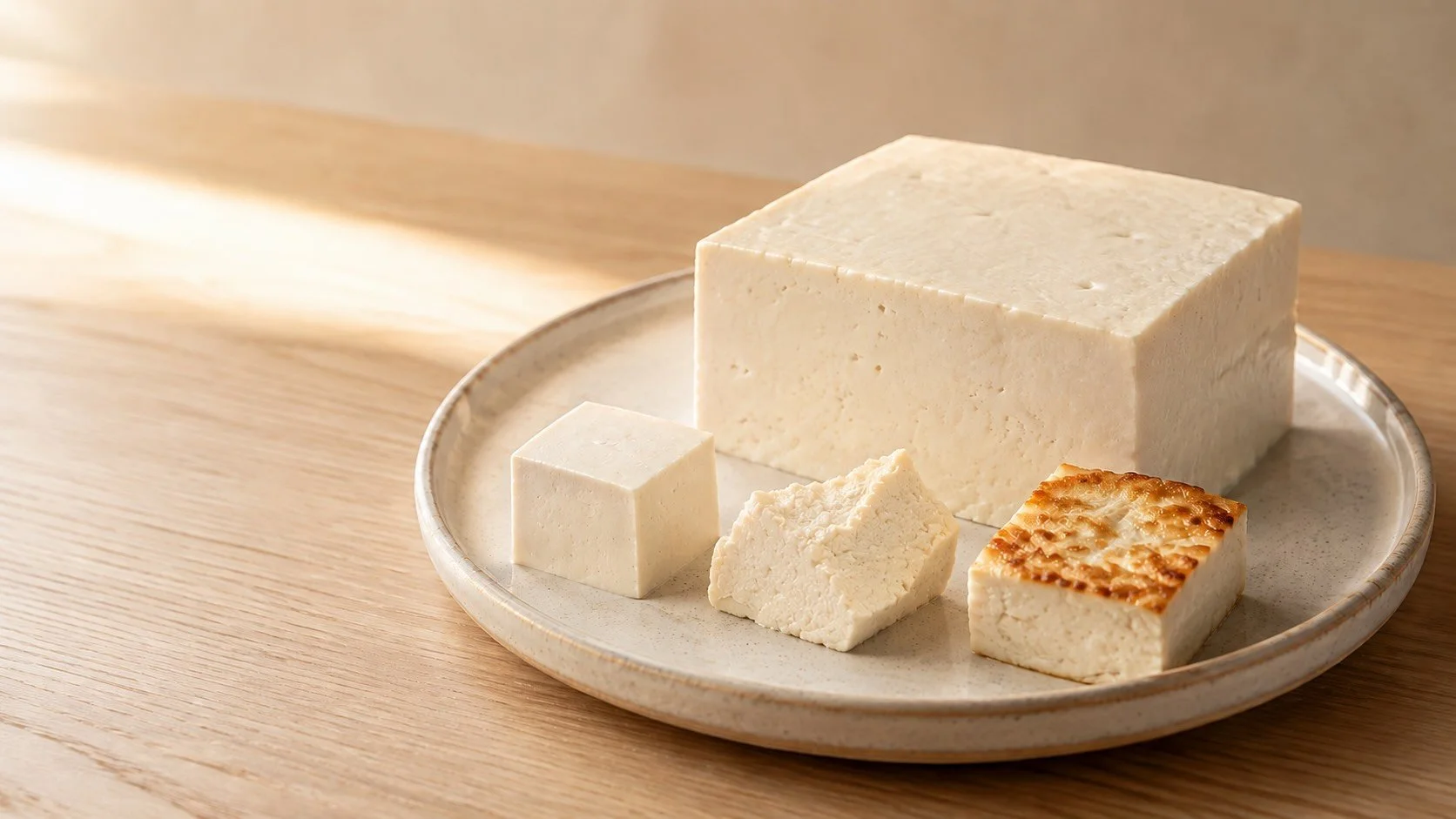
Great tofu cooking begins before the pan heats. Texture determines whether a block will blend smoothly, survive tossing or develop a crisp crust. Yet labels such as “firm” and “silken” are only starting points: brands with the same label may contain different amounts of water.
Instead of memorising rigid rules, learn to read tofu. This guide trains your eyes and fingers so you can match each texture to the result you want.
Lesson 1: Understand the Tofu Gel
Tofu is a network of coagulated soy proteins holding water and fat. Its texture reflects coagulation, curd handling and how much liquid was removed. Generally, more retained water produces tenderness; a denser protein network and greater pressing produce a firmer block.
Silken tofu is usually coagulated in its container without separating and pressing curds. Its continuous, delicate gel may range from soft to firm, but even firm silken tofu behaves differently from pressed firm tofu. Regular block tofu is formed from curds, then drained and often pressed. This creates a more resilient structure.
Firmness does not describe every property. Notice whether tofu is creamy or springy, smooth or porous, fragile or cohesive.
Lesson 2: Perform a Texture Check
Drain the tofu and examine it before choosing your method.
First, look. A glossy, custard-like surface suggests a delicate silken gel. A moist block with fine pores is more suitable for cutting and handling. Large, irregular cavities often indicate frozen–thawed tofu, which cooks quite differently.
Next, press one corner gently. Does it yield like set custard, compress slightly and rebound, or feel dense and resistant? Then lift a cut piece. If it cracks under its own weight, minimise handling. If it bends or remains intact, it can tolerate turning, tossing or skewering.
Finally, taste a small piece when appropriate. This reveals creaminess, bounce, crumbliness and dryness that your fingers may miss.
Lesson 3: Match Texture to the Job
Choose tofu by function, not by an assumption that firmer is always better.
Soft silken tofu suits dressings, sauces, desserts and gentle soups because it blends smoothly. It can also be served chilled or warmed with toppings.
Firm silken tofu holds cleaner portions, but still needs support. Slide it from the packet, cut it with a thin knife and use it in carefully assembled dishes rather than vigorous stir-fries.
Medium or firm block tofu offers enough cohesion for braising, shallow-frying and simmering. It can develop a golden exterior while remaining succulent inside.
Extra-firm tofu is useful for cubes, skewers, crumbles and fast tossing. Its lower moisture helps browning, although an especially dense block can become dry or rubbery when cooked too long.
Frozen–thawed tofu has a spongier network formed as ice crystals disrupt the original gel. After thawing and gentle squeezing, its irregular cavities hold sauces readily. Use it in stews, hotpots and braises where that altered, chewy texture is welcome.
Lesson 4: Change Texture Deliberately
Preparation should solve a specific problem. Pressing removes some free surface and internal moisture from block tofu, helping it brown and making it slightly denser. It is useful when a wet block must be crisped, but unnecessary for silken tofu and not automatically required for every firm block.
For block tofu, patting the surface dry may be enough. If pressing is needed, apply moderate, even weight for 15–30 minutes. Excessive pressure can split it or dry the centre.
Cutting changes perception. Thin slabs offer more browned surface; large cubes preserve a tender middle; small cubes become firmer throughout. Torn pieces create craggy edges that catch seasoning and crisp unevenly. Crumbles distribute flavour throughout fillings and sauces.
Freezing is a transformation, not merely storage. Freeze, thaw completely and squeeze carefully. Do not expect the original smooth texture to return.
Lesson 5: Control Heat and Moisture
Crisping requires surface dryness, sufficient heat and enough space for steam to escape. Preheat the pan, add oil, arrange tofu in one layer and leave each piece undisturbed until a crust releases naturally. Crowding traps moisture; constant movement interrupts browning.
A light starch coating can produce a brittle shell. Add wet sauces after the crust forms, because early liquid softens the surface and lowers pan temperature. Crispness gradually fades in sauce, so serve promptly when contrast matters.
Braising follows the opposite logic. Here, moisture carries flavour around and into cracks, cut surfaces and cavities while gentle heat keeps the tofu tender. Medium-firm tofu balances absorption and structure particularly well. Avoid aggressive boiling, which can break delicate pieces before flavour develops.
For blending, heat is secondary to smoothness. Use silken tofu and blend thoroughly; firmer block tofu can leave a grainier, heavier result.
Common Texture Mistakes
Do not press every tofu by habit. Do not use delicate silken tofu simply because a recipe says “firm”. Do not expect a longer marinade to penetrate deeply into an intact, dense block of tofu. Most of the flavour remains near the surface and enters through cuts, cracks and pores. For more evenly seasoned tofu, use thinner pieces, create torn edges or choose frozen–thawed tofu, which exposes more surface area and internal cavities.
Avoid judging doneness by colour alone. A dark exterior may hide a cold centre, while pale braised tofu can be fully heated. Judge your intended outcome: crisp outside, tender inside, creamy throughout or resilient enough to hold sauce.
Most importantly, do not treat texture variation as failure. A softer brand may be perfect for a stew; a drier one may excel in a stir-fry. Adapt the cut, handling and heat instead of forcing every block through the same routine.
Final Takeaway
Better tofu cooking is texture training: observe the gel, test its strength, choose its job and control moisture accordingly. Once you recognise fragility, density, porosity and surface wetness, recipes become easier to interpret—and easier to rescue.
The goal is purposeful contrast: silky tofu beneath sharp toppings, a crisp shell around a tender centre, or porous tofu carrying savoury broth. Learn what each block can do, and tofu becomes one of the kitchen’s most adaptable ingredients—and an inviting way to make plant-forward meals genuinely satisfying.
